
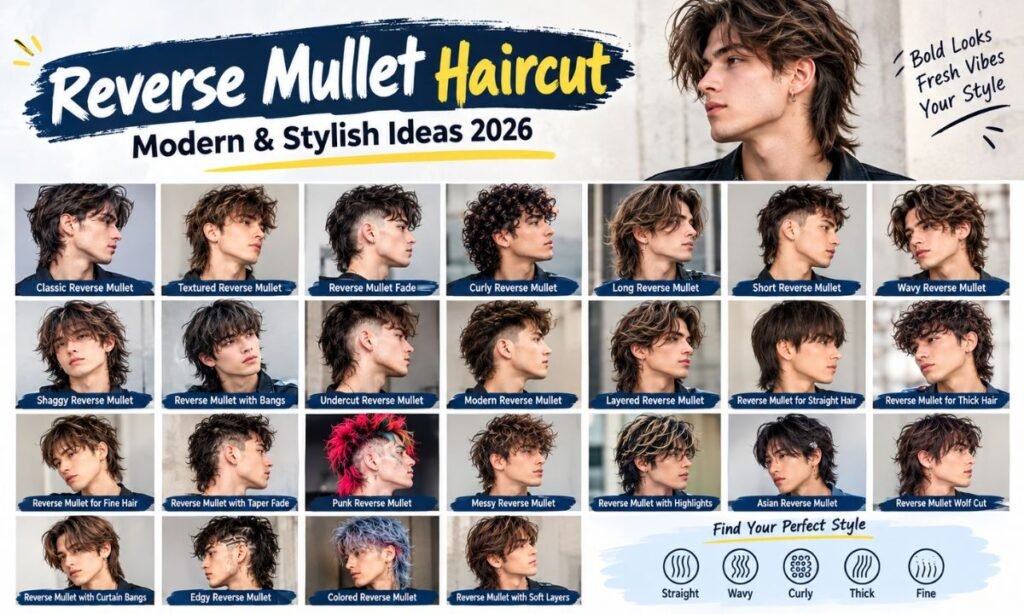
The Reverse Mullet Haircut is a bold modern hairstyle that puts a fresh twist on the classic mullet. Instead of keeping the hair longer at the back, this style focuses on shorter hair in the back while leaving more length toward the front and sides. The result is an edgy, fashion-forward look that stands out without feeling overly complicated.
In 2026, the Reverse Mullet Haircut is becoming an interesting choice for people who want something different from traditional fades and textured cuts. It can be adapted for straight, wavy, or slightly curly hair and customized with fades, layers, texture, or a longer fringe. Whether you prefer a subtle change or a more dramatic style, there are several ways to make this haircut work with your personal look.
What Is a Reverse Mullet?
A regular mullet keeps things short up front and lets the back grow long. The reverse mullet haircut does the opposite. The front and top stay long and full, while the back and sides get cut short.
Think of it as a mullet that got flipped inside out. You still get that bold, two-texture look. It’s just rearranged so the drama sits at the front of your face instead of trailing behind you.
People love it because it frames the face without the extra weight at the neck. It’s a modern twist on a retro classic, and that’s part of why it’s catching on so fast.
Why Is the Reverse Mullet Trending in 2026?
Trends usually circle back once a style feels fresh again, and that’s the story here. The reverse mullet trend taps into the same energy as other flipped classics, like reversed bobs and inverted pixie cuts.
Social media plays a huge role too. Short clips showing dramatic before and after transformations do numbers online, and a haircut this distinct is tailor made for that format. People want something that photographs well and still feels low maintenance.
There’s also a practical side. A shorter back means less hair to deal with at the nape, while the longer front still gives you plenty to style. That balance of ease and impact is a big reason it’s sticking around this year.
Key Benefits of a Reverse Mullet
- Low bulk at the back, so it feels lighter on hot days
- Face-framing length up front that works with most face shapes
- Easy to dress up or down, from sleek to messy
- Distinctive look that stands out without needing bold color
- Grows out gracefully compared to more extreme cuts
Classic Reverse Mullet
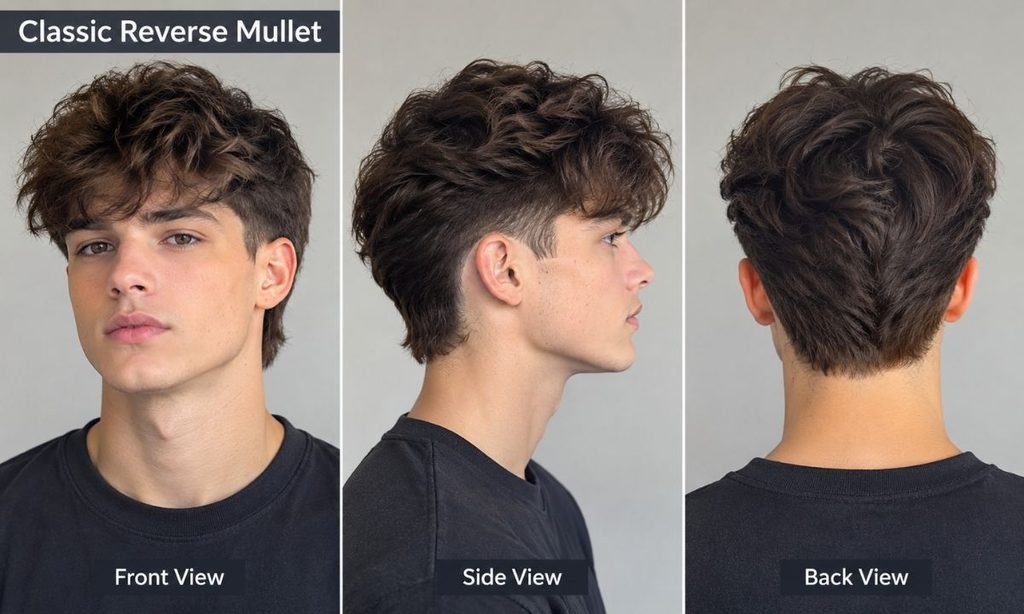
The classic version keeps things simple. You get a clean short cut at the back and sides, with the front left at a medium to long length that just brushes past the jaw or collarbone.
This is the easiest reverse mullet to ask for at the salon since it doesn’t lean into any extra texture or fade work. It’s a solid starting point if you’re testing the style for the first time.
Stylists often use this cut as a base, then customize it later with texture or a fade once you know how much you like the shape.
Textured Reverse Mullet
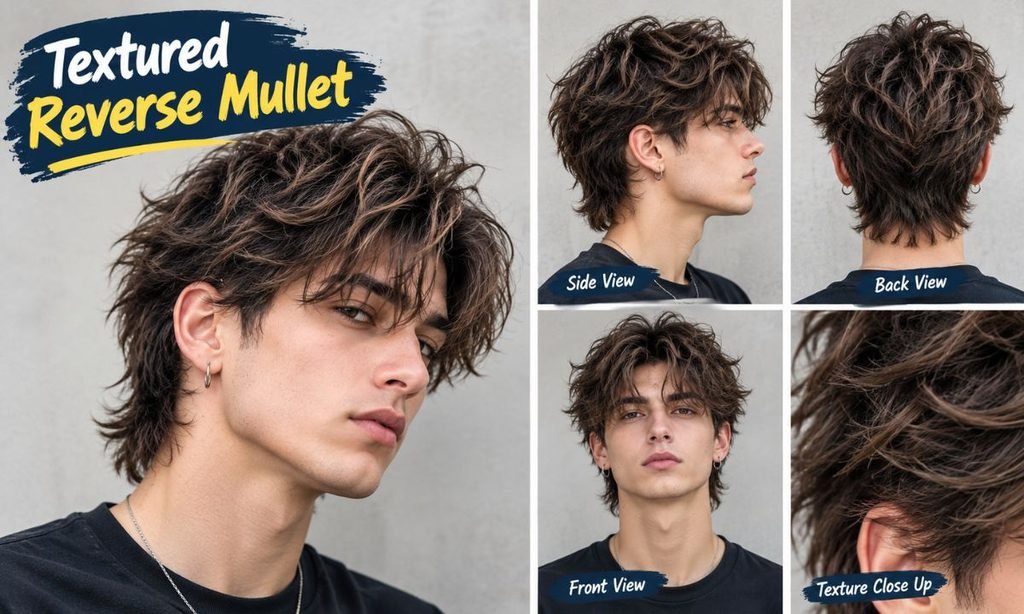
Add some texture and the classic shape turns into something with a lot more personality. Choppy ends up front and slightly tousled layers give the cut a lived in feel, rather than a stiff, salon fresh look.
Texture also hides the transition line between the short back and the long front. That makes the whole cut blend more naturally, which a lot of first timers appreciate.
A texturizing spray or light pomade is usually all it takes to keep this version looking effortless day to day.
Reverse Mullet Fade
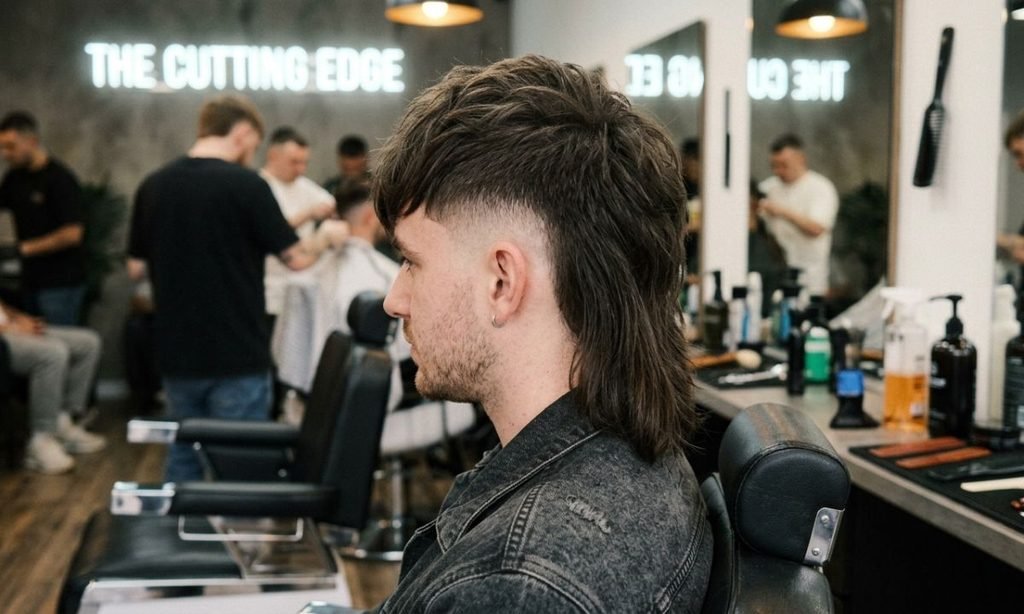
Pair the reverse mullet with a fade and you get a sharper, more polished result. The sides taper down smoothly into the skin, while the top and front stay long and full.
This version reads a bit more edgy and works well if you want the cut to feel more deliberate rather than casual. It’s also a favorite for anyone who likes clean lines on the sides but still wants length to play with up top.
Because fades need regular upkeep to stay crisp, plan on visiting your barber every few weeks to keep the edges sharp.
Curly Reverse Mullet
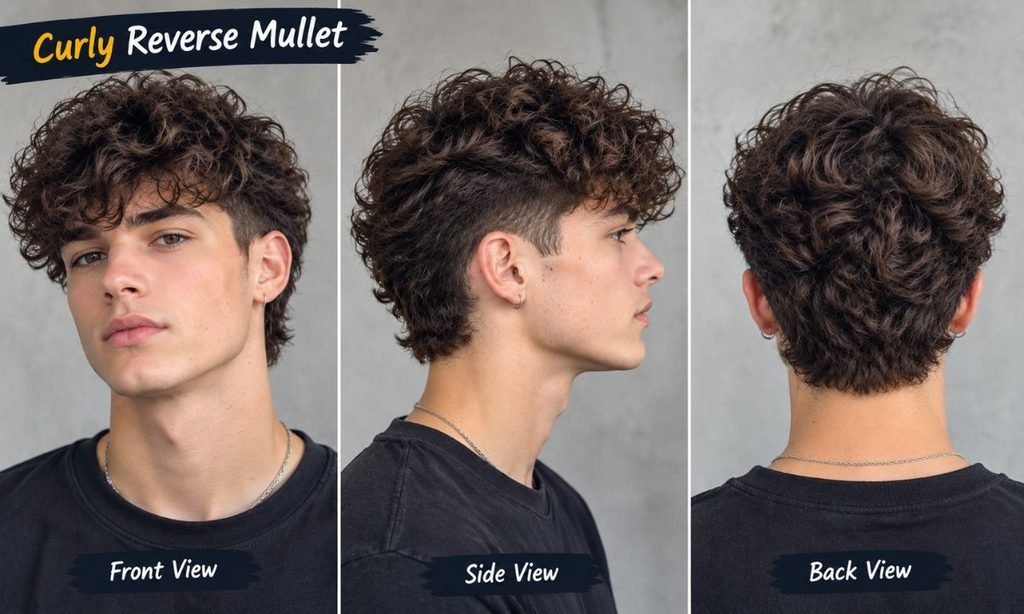
Curls add natural volume, and that volume pairs beautifully with the reverse mullet’s short back and long front setup. The curls up top create height and shape almost on their own.
One thing to know: curly hair shrinks when it dries, so the front will look shorter than it actually is. Talk to your stylist about cutting it slightly longer than you think you need.
A curl defining cream helps keep the shape consistent from wash day to wash day, which matters a lot with this style.
Trendy Reverse Mullet for Men 2026
Men are leaning into this cut hard this year, often combining it with a fade or an undercut for extra contrast. The result feels current without looking like it’s chasing a fad that will disappear next season.
What makes it work for men specifically is the flexibility. You can keep the front short and spiky for a sporty vibe, or grow it out longer for something closer to a shag.
It’s also genuinely low effort. A quick run of styling cream through the front is often all it takes to look put together.
Long Reverse Mullet
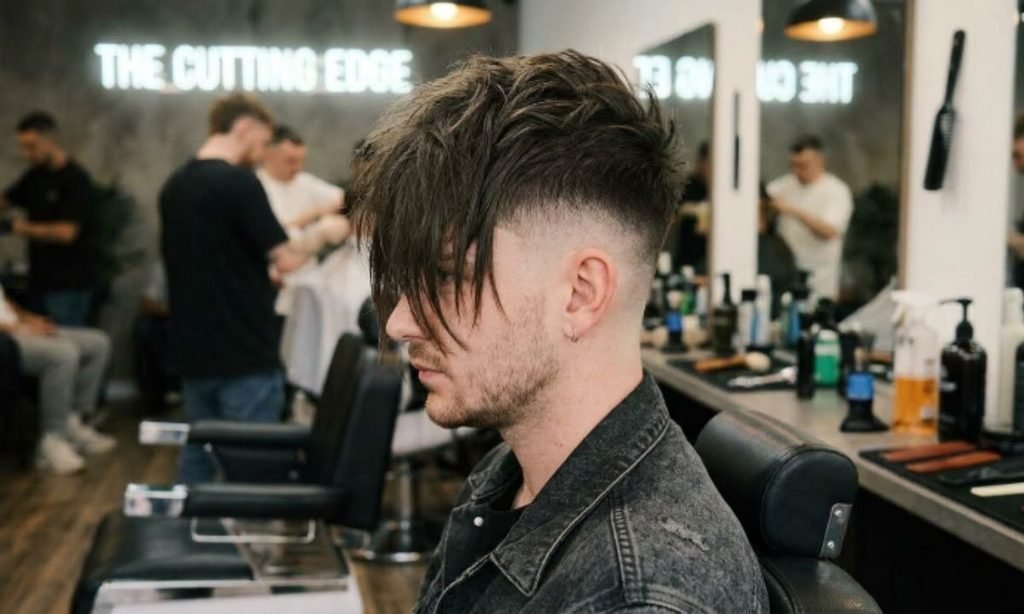
Want more drama? Let the front grow out well past the chin while keeping the back trimmed short. The length gives you room to add waves, curls, or a middle part for a completely different vibe.
This version does need a bit more patience to grow into, and regular trims on the back are non negotiable so the contrast stays sharp.
It also opens the door to styling with a straightener or curling wand, since there’s simply more hair up front to work with.
Short Reverse Mullet
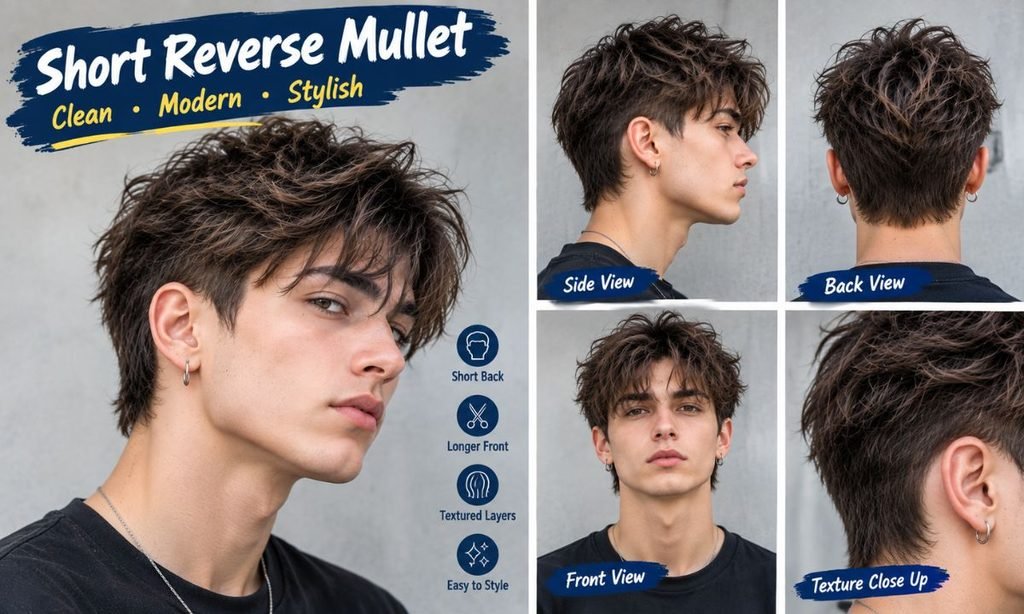
On the flip side, keeping the front shorter, around chin length or above, gives you a much more compact, easy to manage version of the cut. It’s a great pick if you want the reverse mullet look without a long commitment.
This length works especially well with fine hair, since there’s less weight pulling the strands flat. It also dries faster, which is a nice bonus on busy mornings.
Even at this length, the contrast with the short back is still noticeable enough to keep that signature reverse mullet shape.
Wavy Reverse Mullet
Waves add movement without the full commitment of curls. A wavy reverse mullet gets a soft, beachy quality up front that contrasts nicely against the tight, short back.
Sea salt spray or a texturizing mist is your best friend here. Scrunch a little through damp hair and let it air dry for natural looking waves that don’t feel overdone.
This variation tends to photograph really well thanks to all that visible texture catching the light.
Shaggy Reverse Mullet
The shag and the reverse mullet were basically made for each other. Layers throughout the front create that feathered, slightly messy shape shags are known for, while the back stays clean and short.
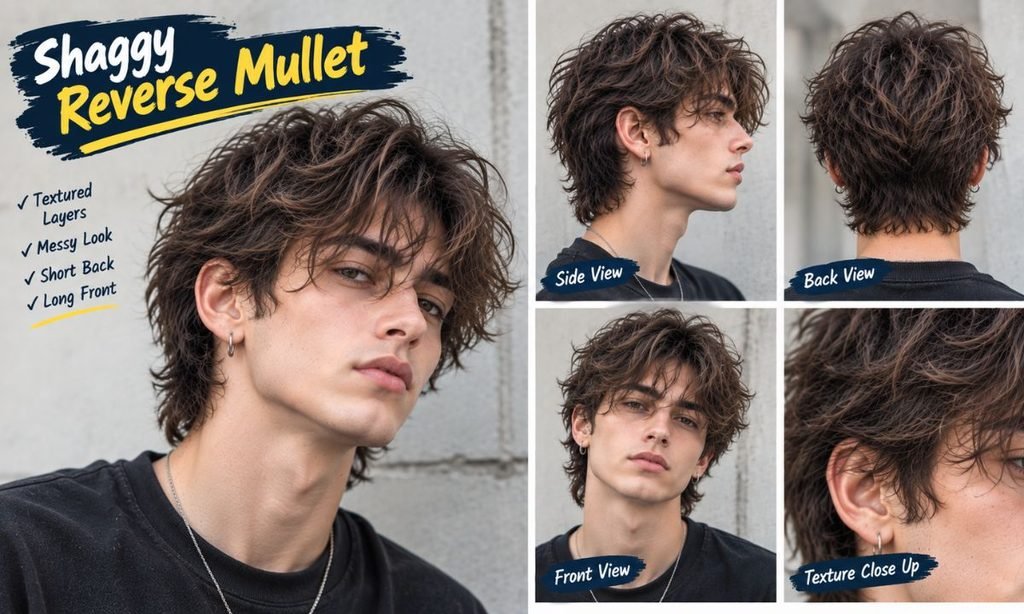
This combo gives you serious volume without much effort. A quick tousle with your fingers after a shower is usually enough to bring the shape to life.
It’s a great option if you want a cut that looks intentional even on days you don’t style it much at all.
Reverse Mullet with Bangs
Bangs bring a whole new dimension to this cut. Whether you go for curtain bangs, blunt bangs, or something wispy, they add extra framing right where your face needs it most.
This pairing works especially well if you want to soften a stronger jawline or draw more attention to your eyes.
Just keep in mind that bangs need more frequent trims to stay in shape, so factor that into your maintenance routine.
Undercut Reverse Mullet
An undercut takes the short back and sides even shorter, almost buzzed, while the top and front stay noticeably long. It’s a bold, high contrast take on the reverse mullet.
This version tends to hold its shape longer between cuts since the undercut portion grows out more slowly in terms of visible change.
It’s also one of the easier versions to style day to day, since most of the effort goes into the long section up front.
Modern Reverse Mullet
A modern reverse mullet usually means clean, precise lines paired with subtle texture rather than heavy layers. It feels more refined and less rock and roll than some of the edgier variations.
This take suits people who want the trend but still need something office appropriate. It reads as intentional rather than experimental.
A light finishing product with a matte finish keeps this version looking polished without any greasy shine.
Layered Reverse Mullet
Layers cut into the front section add lightness and movement, which helps if your hair tends to feel heavy or flat. The back stays short and simple, letting the layered front do all the talking.
This works particularly well on thick hair, since layering removes bulk without sacrificing length.
Ask your stylist for face framing layers specifically if you want extra emphasis around your cheekbones and jaw.
Reverse Mullet for Straight Hair
Straight hair shows off the sharp contrast between the long front and short back extremely clearly, since there’s no curl pattern to soften the transition.
This makes straight hair a great canvas for the classic or fade versions, where clean lines matter most.
A flat iron can help maintain that sleek, straight finish up front if your natural texture has any slight wave to it.
Reverse Mullet for Thick Hair
Thick hair gives this cut plenty of volume to work with, especially up front. Layering is your friend here, since it thins things out and keeps the style from feeling too heavy.
The short back is also a relief for a lot of people with thick hair, since it cuts down on bulk exactly where it tends to build up most.
Ask for thinning shears if your stylist thinks the front section needs less density.
Reverse Mullet for Fine Hair
Fine hair can look thin if a style demands too much length, so the reverse mullet’s shorter back is a genuine advantage. It keeps the overall silhouette looking fuller rather than stretched thin.
Blunt cutting, rather than heavy layering, tends to work better on fine strands since it preserves as much density as possible.
A volumizing mousse at the roots can also help this version look fuller before you even start styling the ends.
Reverse Mullet with Taper Fade
A taper fade is a gentler version of a full fade, blending short to slightly longer without going all the way down to the skin. Combined with the reverse mullet, it gives a soft, gradual transition on the sides.
This is a great middle ground if a full fade feels too intense but you still want that clean, groomed edge.
It also tends to grow out more forgivingly than a skin fade, so you can stretch out time between barber visits.
Punk Reverse Mullet
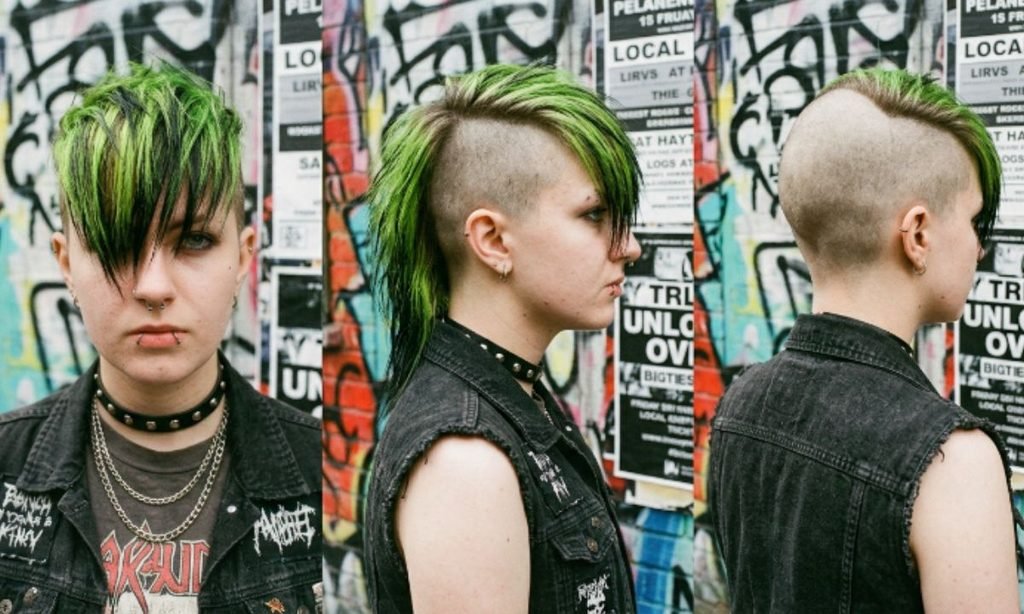
Turn the volume up with a punk reverse mullet. Think choppy, uneven ends, maybe a shaved section or two, and hair that looks intentionally undone rather than perfectly groomed.
This version pairs well with bold color choices, from jet black to bright, unnatural shades, if you really want to lean into the rebellious energy.
Styling wax with a strong hold works best for keeping that spiky, textured shape in place all day.
Messy Reverse Mullet
Not everything needs to be precise. A messy reverse mullet embraces bedhead energy on purpose, with tousled, undone texture up front and a short, low fuss back section.
This is arguably the lowest maintenance version of the cut, since imperfection is basically the point.
A dry texturizing spray, scrunched in with your hands, is really all you need to nail this look.
Reverse Mullet with Highlights
Highlights add dimension and draw extra attention to the longer front section, which is exactly where you want eyes to land in this cut.
Face framing highlights in particular work well, since they trace the same lines your hair already falls in.
Balayage style highlights tend to look more natural and low maintenance than traditional foils if you’re worried about frequent touch ups.
Asian Reverse Mullet
On straighter, often thicker Asian hair textures, the reverse mullet tends to hold a crisp, graphic shape extremely well. The contrast between the short back and long front reads very clean.
Many versions popular in South Korea and Japan pair this cut with soft curtain bangs and subtle layering for a rounder, softer overall silhouette.
Regular trims matter a lot here since straighter hair shows any unevenness more obviously than wavy or curly textures do.
Reverse Mullet Wolf Cut
The wolf cut and the reverse mullet share a lot of DNA already, both leaning on heavy layers and a shaggy, textured finish. Combining them means extra choppy layers throughout the long front section.
This mashup creates serious volume and movement, especially when styled with a round brush or diffuser.
It’s a great pick if you want maximum texture and don’t mind a slightly wilder, more undone finish.
Reverse Mullet with Curtain Bangs
Curtain bangs part down the middle and sweep to either side, softening the face and blending naturally into the rest of the long front section.
This combo feels romantic and a little retro, especially compared to some of the punkier variations above.
A round brush while blow drying helps train curtain bangs to sit exactly where you want them.
Edgy Reverse Mullet
For an edgy reverse mullet, combine sharp fades, choppy ends, and maybe a pop of unexpected color. This version is meant to turn heads rather than blend in.
It works especially well for anyone who already gravitates toward bold fashion choices and wants their hair to match that same energy.
Confidence really is the main styling product needed for this one.
Colored Reverse Mullet
Color transforms this cut instantly, whether you go subtle with a few dimensional tones or bold with something like copper, platinum, or even vivid fantasy shades.
Because the front is the longest, most visible section, it’s also where color makes the biggest visual impact.
Talk to your colorist about a color safe shampoo routine if you’re going bold, since vivid shades fade faster than natural ones.
Reverse Mullet with Soft Layers
Not every reverse mullet needs to be dramatic. Soft, subtle layers give the front section gentle movement without any harsh, choppy lines.
This version suits anyone who wants a more understated, everyday wearable take on the trend.
It’s also a forgiving choice if you’re new to the cut and not ready to commit to something more extreme just yet.
Does a Reverse Mullet Work with Curly Hair?
Short answer: yes, and it often looks even better with curls. The natural bounce and volume in curly hair fill out the shorter back section nicely, while the front curls add shape and personality on their own.
The main thing to remember is that curls shrink as they dry, sometimes by a couple of inches. Always ask your stylist to account for that shrinkage before any scissors come out.
How to Style a Reverse Mullet
Styling this cut isn’t complicated, but a few small habits make a big difference in how sharp it looks day to day.
Use a Texturizing Product
A texturizing spray, paste, or light pomade helps define the ends of the longer front section, giving it that slightly undone, intentional look rather than falling flat.
Apply it to damp or dry hair, working it through with your fingers rather than a brush for a more natural finish.
Add Volume
Blow drying upside down for a minute or two, or using a round brush at the roots, gives the top extra lift. That lift is what really makes the contrast with the short back pop.
A volumizing mousse applied at the roots before drying can boost this effect even further, especially on fine or straight hair.
Maintain Regular Trims
The short back and sides need attention every 3 to 5 weeks to keep the contrast crisp. Skip too many appointments and the whole cut starts to lose its shape.
The long front section is more forgiving and can go longer between trims, unless you’re dealing with split ends or want to maintain a specific length.
FAQs – Reverse Mullet Haircut
What is a reverse mullet?
It’s a haircut where the back and sides are cut short while the front and top stay long, the opposite setup of a traditional mullet.
Does a reverse mullet work for all hair types?
Yes. Straight, wavy, curly, and coily hair can all wear this cut, though the styling approach and cutting technique shift a bit depending on texture.
Is the reverse mullet suitable for men?
Definitely. It’s actually one of the more popular men’s cuts this year, often combined with a fade or undercut on the sides.
How often should a reverse mullet be trimmed?
Plan on a trim every 3 to 5 weeks for the short back and sides to keep the contrast looking sharp. The front section can typically go longer between cuts.
What face shape suits a reverse mullet best?
Most face shapes can pull this off since the long front is so easy to customize. Round faces often benefit from more length and layering up front, while square or angular faces can go shorter and sharper.
