
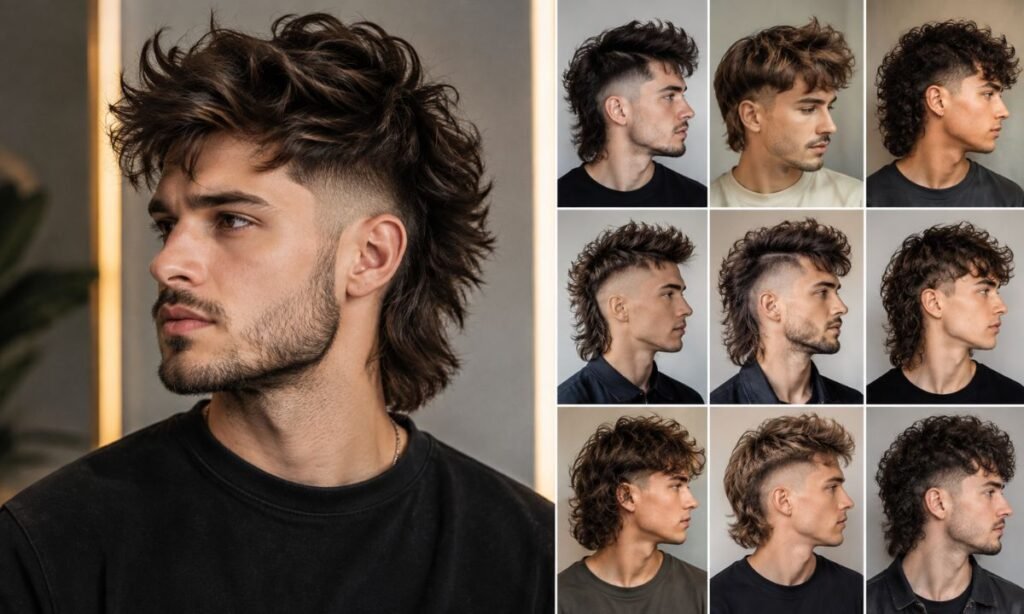
Wondering if a faux hawk mullet haircut can give you an edgy look without going full mohawk?
It can, and that’s exactly why this haircut has caught attention among men who want more personality from their style.
The cut combines the raised shape of a faux hawk with the longer back of a classic mullet haircut.
You get shorter sides, extra movement through the top, and enough length behind the head to create that recognizable silhouette.
Below, you’ll find the best versions, styling ideas, maintenance tips, and barber advice to help you choose the right one.
What Makes a Faux Hawk Mullet Haircut Different?
A faux hawk mullet haircut combines two distinct haircut shapes into one balanced style.
The top usually stays longer and textured, allowing the hair to rise toward the center like a faux hawk.
Meanwhile, the back keeps noticeable length, which gives the haircut its signature mullet shape.
The sides can be faded, tapered, or left slightly fuller depending on how bold you want the result.
Unlike a traditional mohawk, this style usually keeps more hair on the sides, making it easier to wear every day.
The biggest advantage is flexibility because your barber can change several proportions without losing the main idea.
You might choose a low fade for a softer appearance or a skin fade for stronger contrast.
Your natural hair texture can also change the entire personality of the haircut.
Straight hair can look sharp and structured, while waves and curls can create a more relaxed finish.
That flexibility makes the faux hawk mullet suitable for men with very different personal styles.
Best Faux Hawk Mullet Haircut Styles
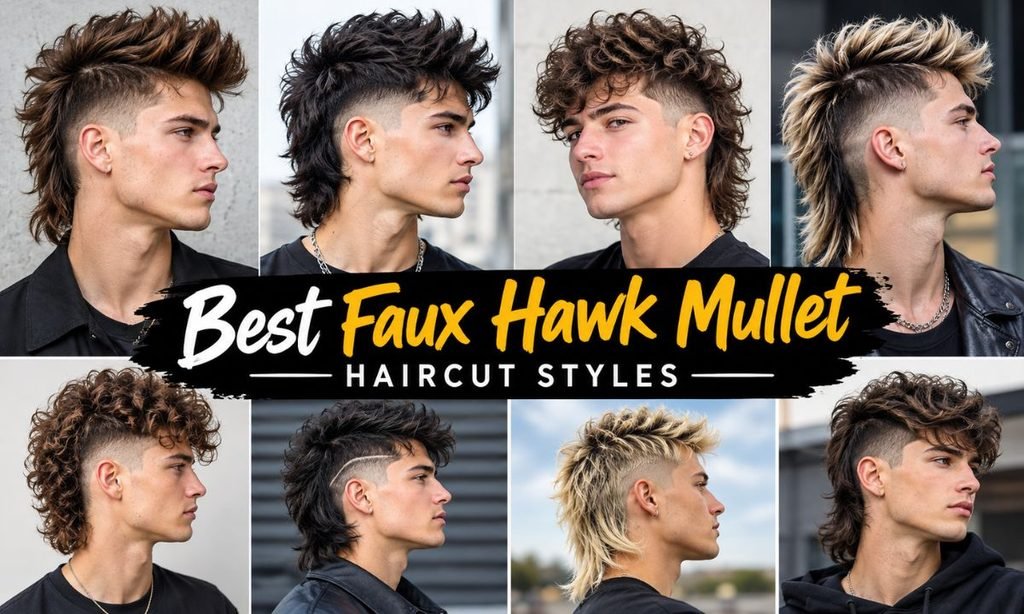
Choosing the right faux hawk mullet style depends on your hair texture, preferred maintenance, and how noticeable you want the haircut to be.
Some versions look clean and controlled, while others lean heavily into messy texture and natural movement.
The fade also makes a major difference because it determines how much contrast appears around the sides.
Meanwhile, the length and texture on top control how strongly the faux hawk shape stands out.
Here are 10 variations you can show your barber before deciding which direction suits you.
Classic Faux Hawk Mullet
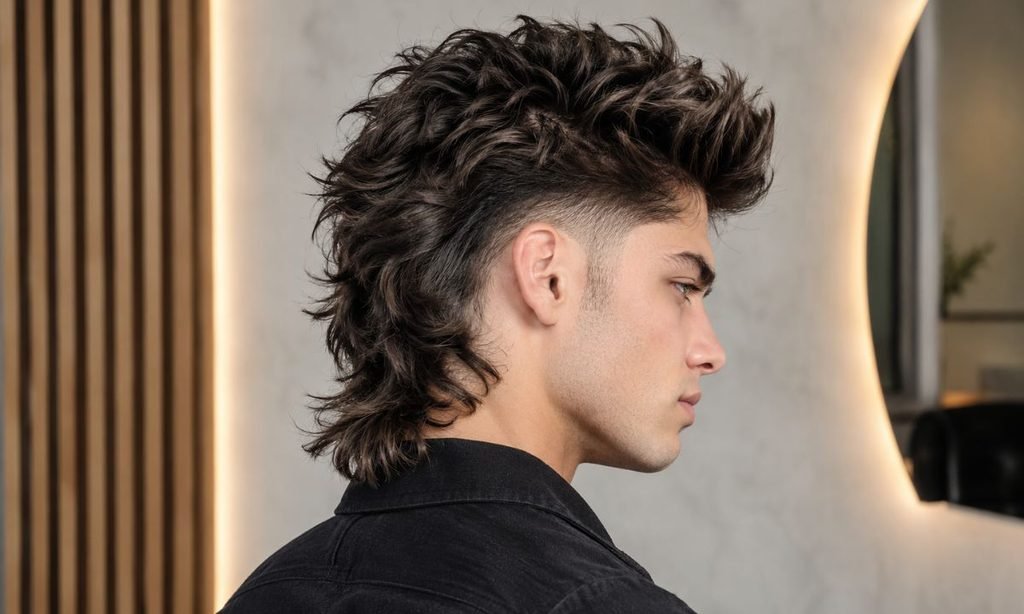
The classic faux hawk mullet keeps the original concept simple without adding an overly dramatic fade.
The sides stay relatively short, while the top has enough length to create natural height through the center.
The back remains longer and blends into the overall shape rather than looking disconnected.
This version works well for men who want a noticeable haircut without making the sides extremely short.
A small amount of matte styling clay can add definition while keeping the finish natural and flexible.
For everyday styling, you don’t need to create perfectly symmetrical spikes across the top.
Use your fingers to push the middle section upward while leaving some natural separation between strands.
That slightly imperfect texture gives the haircut a more modern appearance.
If your hair is thick, ask your barber to remove excess weight without making the top too thin.
The goal is controlled volume that still looks like your natural hair.
Low Fade Faux Hawk Mullet
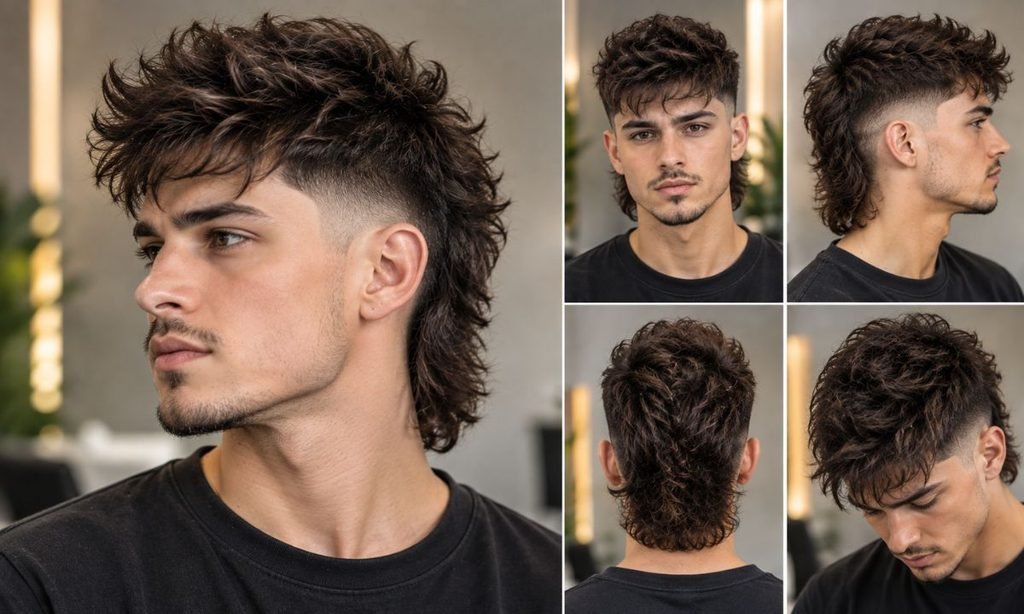
The low fade faux hawk mullet creates a cleaner appearance without removing too much hair from the sides.
The fade begins lower around the ears and gradually transitions upward into the longer sections.
That leaves more weight near the upper sides, giving the haircut a softer overall silhouette.
It’s a good choice if you want the faux hawk mullet shape but don’t want an extremely aggressive contrast.
The longer back can remain relaxed while the fade keeps the lower portion looking neat.
This version also gives you plenty of styling flexibility throughout the week.
You can push the top upward when you want a stronger faux hawk effect.
On relaxed days, you can simply add a little textured styling paste and let the hair settle naturally.
The lower fade also pairs nicely with facial hair because the transition around the temples can look clean and deliberate.
Ask your barber to blend the fade smoothly into the longer top instead of creating a harsh visual break.
Mid Fade Faux Hawk Mullet
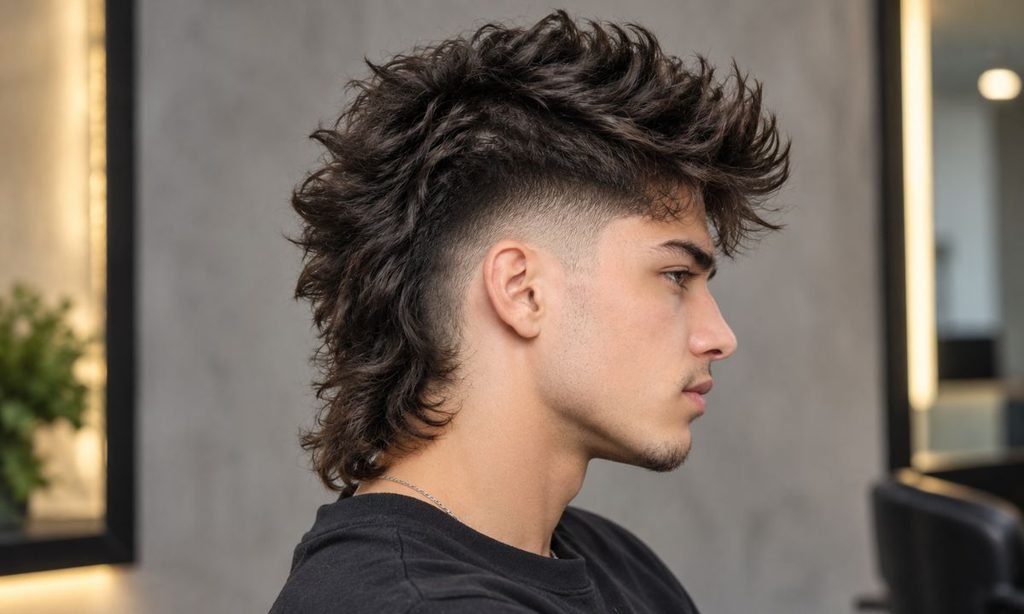
A mid fade faux hawk mullet creates more contrast than the low fade while remaining relatively balanced.
The fade starts around the middle of the sides, making the longer top and back stand out more clearly.
This approach works especially well with straight, thick, or slightly wavy hair that can hold some height.
The top can be textured with scissors to create separation instead of relying entirely on styling products.
That combination gives the haircut a sharp outline while keeping enough movement for everyday wear.
If you want more height, use a blow dryer while directing the hair toward the center.
Once the hair has cooled, apply a small amount of matte paste to hold the shape.
Avoid using too much product because heavy buildup can make the top look flat and greasy.
The back should also receive enough attention because an uneven mullet section can throw off the entire haircut.
A clean neckline and carefully shaped back help the mid fade look intentional from every angle.
High Fade Faux Hawk Mullet
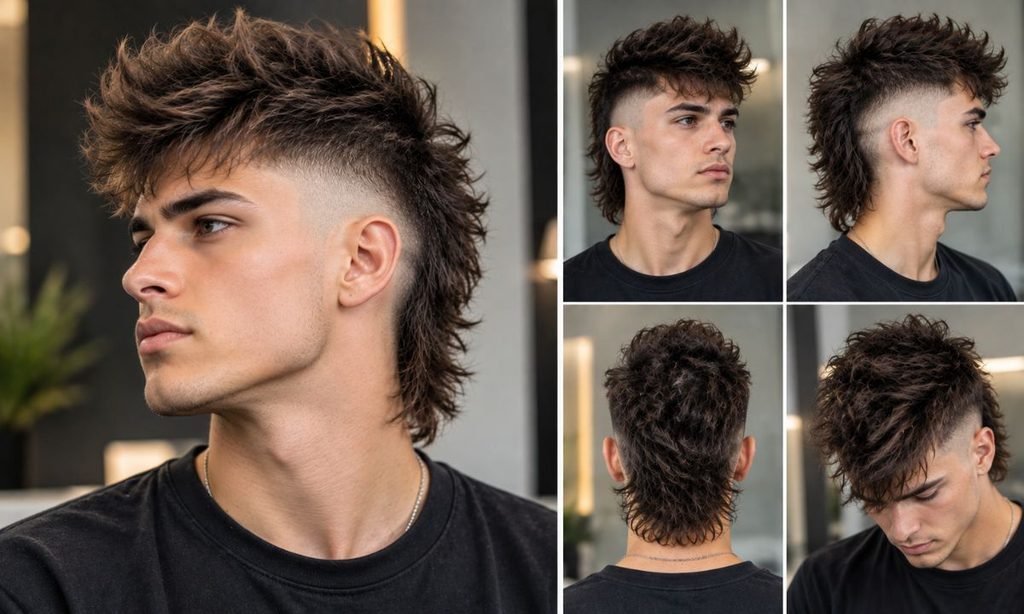
The high fade faux hawk mullet offers a much stronger contrast between the sides and the longer sections.
The fade reaches higher on the head, leaving the top and back to create most of the visual impact.
This makes the haircut feel sharper and more dramatic than a low or mid fade version.
Men with thick hair can benefit from removing some internal weight so the top doesn’t become overly bulky.
The result can look especially striking when the central section has strong texture and controlled volume.
Because the sides are much shorter, the haircut’s proportions become more important with a high fade.
You’ll want enough length on top to create the faux hawk shape without making the back look disconnected.
Your barber can use textured layers to create movement and prevent the top from becoming a solid block.
For styling, work a small amount of product through the roots and ends instead of coating every strand.
That approach keeps the finish lighter and lets the haircut’s natural structure do most of the work.
Skin Fade Faux Hawk Mullet
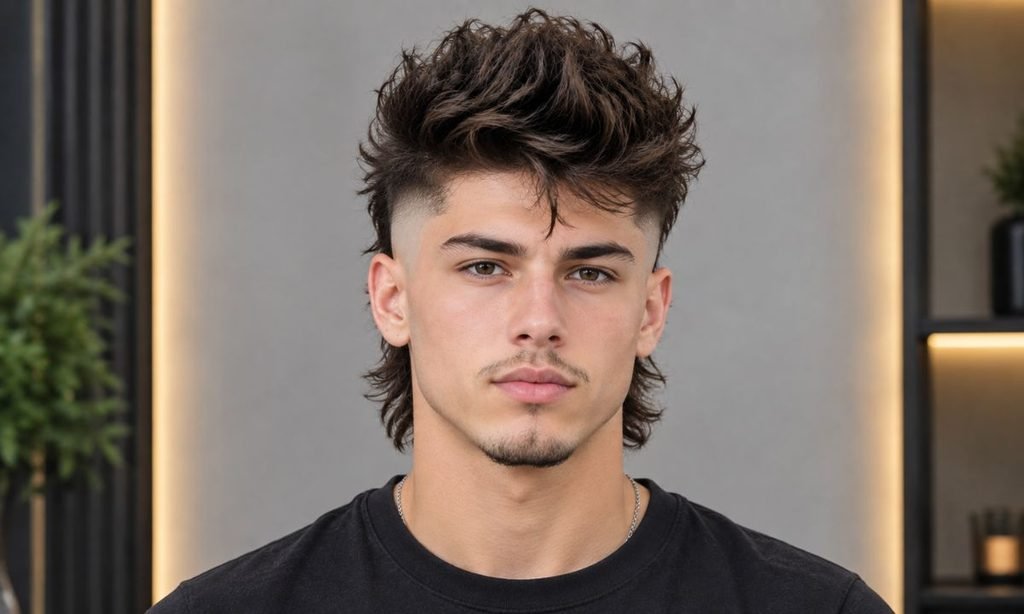
A skin fade faux hawk mullet takes the contrast to another level by fading the lower sides down toward the skin.
The extremely short sides make the longer top and back immediately stand out.
This version works particularly well when you want a crisp, attention-grabbing haircut with a strong silhouette.
However, the sharp contrast also means regrowth becomes more noticeable as the fade grows out.
Regular cleanup can therefore help maintain the polished appearance of the original cut.
The top doesn’t need to be styled into rigid spikes just because the sides are extremely short.
A textured, slightly messy finish can actually create a more modern balance.
Use matte clay or a lightweight styling paste if you need extra control.
If your hair is curly or wavy, let the natural texture provide some of the height instead of fighting against it.
The contrast between the clean skin fade and natural texture can create a distinctive finish.
Taper Fade Faux Hawk Mullet
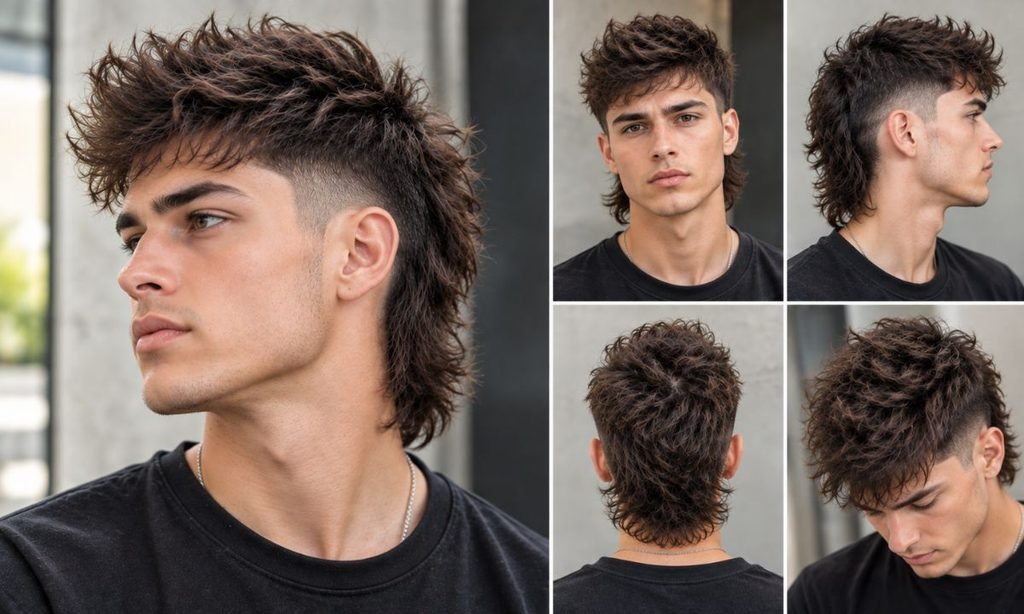
The taper fade faux hawk mullet offers a more subtle alternative to aggressive fade variations.
Instead of dramatically removing hair across the entire side, the taper focuses mainly around the temples and neckline.
This leaves more natural density around the sides while still giving the haircut a clean outline.
It’s ideal for men who like the mullet haircut concept but want something less extreme.
The longer top can still be shaped upward to create the faux hawk effect.
Another advantage is how naturally this version grows out between appointments.
Because the sides aren’t taken down as aggressively, small amounts of growth don’t immediately change the overall appearance.
You can use styling cream for a softer finish or matte paste for stronger definition.
The back can remain longer and slightly loose, especially if you prefer a casual appearance.
This makes the taper version a practical choice for men who don’t want high-maintenance barber visits.
Textured Faux Hawk Mullet
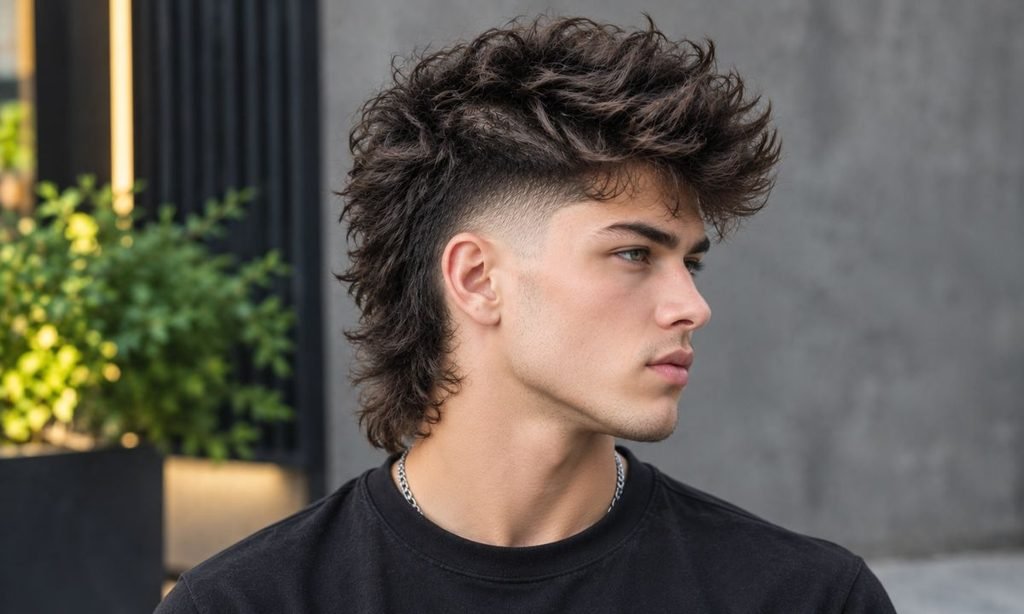
A textured faux hawk mullet focuses more on movement than extreme height or sharp spikes.
Your barber can use different cutting techniques to create separation throughout the top and reduce excessive weight.
That texture helps thick hair appear lighter while giving finer hair more visual dimension.
The back can also receive subtle layers so it doesn’t hang like one heavy section.
This creates a relaxed silhouette that still clearly shows the faux hawk and mullet combination.
Styling this version is usually straightforward because texture does much of the work for you.
Apply a small amount of texturizing paste to damp or dry hair and work it through with your fingers.
Push the central section upward while gently separating individual pieces.
Don’t worry if a few strands fall in different directions because natural variation can make the haircut look better.
The finished style should feel textured and controlled rather than perfectly arranged.
Messy Faux Hawk Mullet
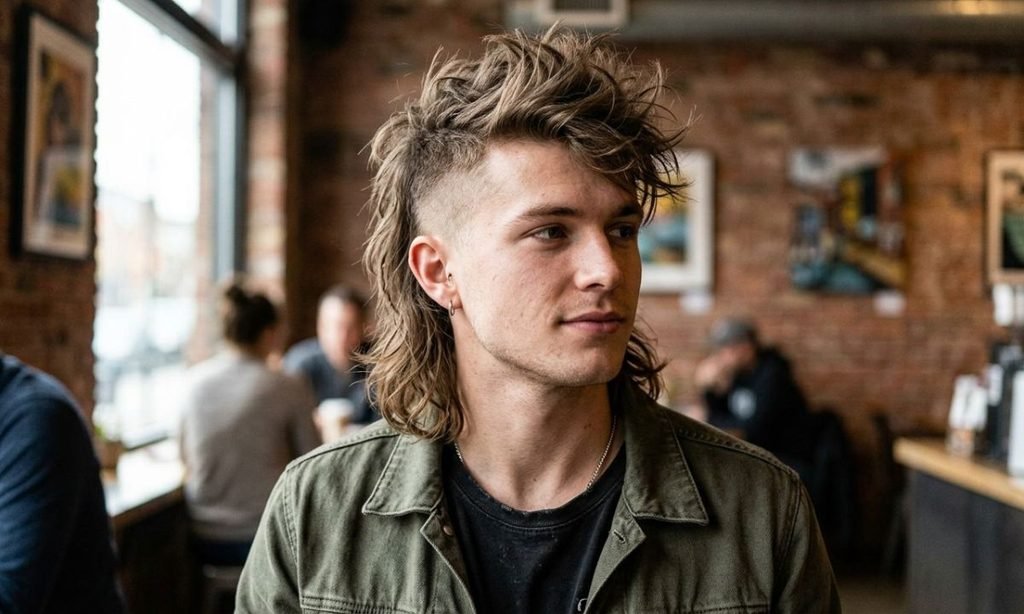
The messy faux hawk mullet is perfect if you prefer a haircut that looks relaxed instead of carefully polished.
The top usually features uneven texture, loose spikes, and natural separation between sections.
The longer back can also remain slightly untidy without losing the recognizable mullet shape.
This makes the style particularly appealing to men who don’t want to spend too long styling their hair.
A small amount of product can create enough control without removing the messy character.
Start with towel-dried hair and apply a small amount of lightweight styling product.
Twist several sections with your fingers and push the middle upward.
You can leave the sides relatively natural because the haircut itself already provides the necessary contrast.
A sea salt spray can also add texture if your hair tends to sit flat.
The trick is knowing when to stop because overstyling can turn effortless texture into something that looks forced.
Curly Faux Hawk Mullet
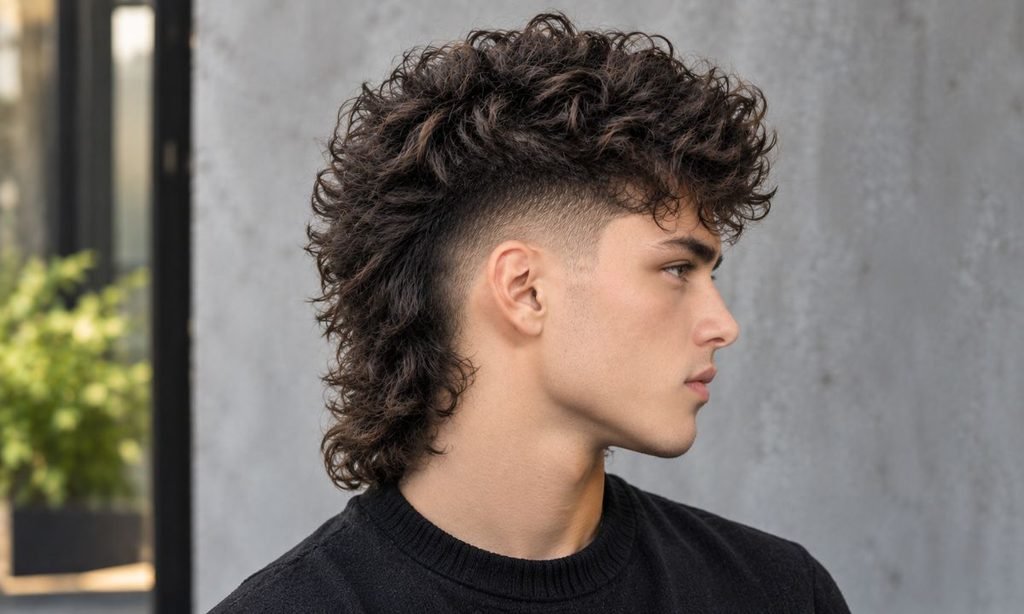
A curly faux hawk mullet uses natural curls to create volume and movement through the center of the haircut.
Instead of straightening the curls, your barber can shape the sides and back around their natural pattern.
Keeping enough length on top allows the curls to build height while maintaining their individual shape.
The back can remain longer, creating a softer and more organic version of the traditional mullet.
This approach works particularly well when you want texture without relying on heavy styling products.
Curly hair needs slightly different maintenance because shrinkage can change the visible length considerably.
Your barber should understand how your curls behave when they dry before deciding how much to remove.
A small amount of curl cream can enhance definition while helping control unwanted frizz.
Try not to brush dry curls aggressively because that can disrupt the natural curl pattern.
Instead, use your fingers or a wide-tooth comb when the hair is damp and easier to manage.
Wavy Faux Hawk Mullet
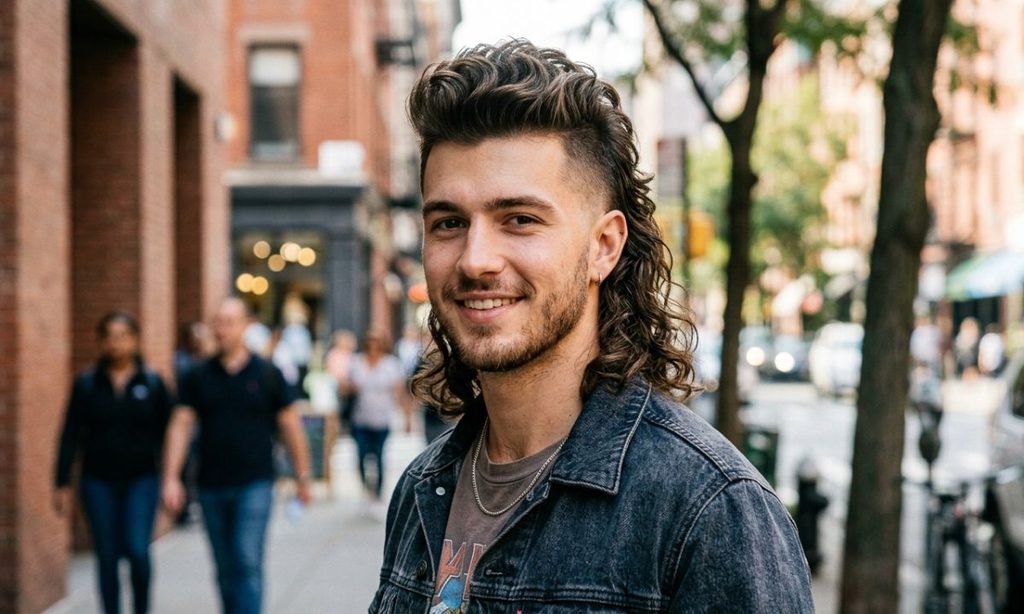
A wavy faux hawk mullet uses natural waves to create the height and movement associated with the faux hawk.
The waves can make the haircut look textured without requiring sharp spikes or heavy styling.
Keeping some length through the top allows the natural bends to develop properly.
The longer back can also follow the wave pattern, giving the mullet a relaxed and flowing appearance.
This version feels particularly natural when the haircut isn’t overly structured.
For styling, apply a lightweight sea salt spray or styling cream to damp hair.
Use your fingers to guide the middle section upward while allowing the waves to form naturally.
A diffuser can help enhance the texture if your hair needs additional volume.
Avoid brushing everything into perfect alignment because that can remove much of the natural movement.
The best result usually comes from guiding the waves rather than trying to completely control them.
How to Choose the Right Faux Hawk Mullet
Choosing a faux hawk mullet haircut shouldn’t start with a photograph alone.
Think about how your hair behaves naturally, how much time you spend styling it, and how often you visit your barber.
Straight hair can support a structured faux hawk, while curly hair may look better with a softer central shape.
Your preferred level of contrast also matters because a taper looks very different from a skin fade.
Consider your daily routine first, then choose the haircut variation that fits it.
Your face shape can also help guide the proportions without becoming a strict rule.
A little extra height can add vertical structure to rounder facial proportions.
Longer faces may look more balanced with moderate volume rather than extremely tall spikes.
Square faces can work nicely with textured layers that soften the overall outline.
Still, your hair density and personal preference should have the final say.
Faux Hawk Mullet for Different Hair Types
The faux hawk mullet can work across many hair types when the cut is adapted correctly.
Straight hair often needs texturing or styling product to create lasting separation through the top.
Wavy hair already has natural movement, making it easier to achieve a relaxed faux hawk shape.
Curly hair can create impressive volume, although the barber needs to account for curl shrinkage.
Thick hair may require strategic weight removal so the top doesn’t become overly heavy.
Fine hair can also work with this haircut when the barber focuses on creating visual texture.
However, excessive thinning can sometimes make fine hair appear even less dense.
Strategic layering can provide movement without removing too much overall volume.
Your styling routine should also influence the final cut because not everyone wants to blow-dry their hair daily.
Tell your barber exactly how much effort you’re willing to put into styling before they start cutting.
Best Face Shapes for a Faux Hawk Mullet
A faux hawk mullet haircut can be customized for oval, round, square, heart, and longer face shapes.
The important factor isn’t following a strict rulebook but adjusting the haircut’s height, width, and back length.
Rounder faces can benefit from moderate vertical volume through the center of the top.
Longer faces may work better with controlled height and some visual width around the sides.
Square faces can pair well with textured edges because softer movement can balance strong facial angles.
Your barber can also consider your hairline, forehead, temples, and natural growth patterns.
These details often matter more than generic face-shape charts found online.
For example, a strong cowlick may affect where the central faux hawk section naturally wants to sit.
A receding temple area may also influence how high the fade should go.
A good haircut should work with your natural features rather than forcing your hair into an uncomfortable shape.
How to Style a Faux Hawk Mullet Haircut
Styling a faux hawk mullet doesn’t have to become a complicated morning routine.
Start with clean, towel-dried hair and apply a small amount of lightweight styling product.
Work the product through the top, concentrating on the areas where you want texture and control.
Use your fingers to push the central section upward while guiding the surrounding hair slightly backward.
If your hair needs extra volume, use a blow dryer while lifting the roots with your fingers.
Once the hair has the shape you want, allow it to cool before adding more product.
This helps the style settle without becoming overloaded with wax or clay.
A small amount of matte paste can add separation without creating an overly shiny finish.
If you prefer a messy style, twist a few pieces and leave the rest untouched.
Remember, the haircut itself should provide most of the structure rather than relying on excessive product.
What Products Work Best?
The best styling product depends on your hair texture and the finish you want.
Matte clay provides stronger control and works well for thicker hair that needs extra hold.
Styling paste offers flexible texture and usually feels lighter than traditional heavy waxes.
Sea salt spray can add movement and volume to straight or fine hair before styling.
For curls, curl cream can improve definition while keeping the hair softer and more manageable.
A lightweight styling cream can also work well when you want a natural finish without strong hold.
Start with a small amount because adding more product is always easier than removing it.
Warm the product between your palms before applying it to the hair.
Then distribute it evenly instead of concentrating everything around the front.
If your hair starts looking greasy, you’ve probably used more than necessary.
The best styling result usually feels flexible enough that you can still run your fingers through it.
How Often Should You Maintain the Haircut?
The maintenance schedule depends on the specific fade, taper, and back length you choose.
A skin fade generally needs more frequent cleanup because new growth becomes visible against the shaved sections.
A taper can grow out more naturally, allowing you to wait longer between barber appointments.
The longer back also needs occasional shaping so the mullet silhouette doesn’t become uneven.
If you like a deliberately grown-out appearance, you can stretch your appointments further.
Tell your barber how often you realistically plan to return.
That information can help them choose a shape that continues looking good as it grows.
If you want a consistently crisp appearance, regular maintenance will keep the sides and neckline cleaner.
If you prefer a relaxed look, ask for softer transitions that won’t look awkward during growth.
The best maintenance plan is one you can actually keep up with.
Faux Hawk Mullet vs. Mohawk Mullet
The main difference between a faux hawk mullet and a mohawk mullet comes down to the sides.
A traditional mohawk usually creates a much stronger separation between the central strip and the surrounding hair.
A faux hawk keeps more hair around the sides, which creates a softer transition.
Both styles can feature longer hair at the back, so they may look similar from certain angles.
However, the construction and overall contrast give them different visual personalities.
If you prefer a haircut that can be dressed up or down, the faux hawk gives you more flexibility.
You can pair it with a taper, low fade, or medium fade for different levels of contrast.
A mohawk generally creates a more dramatic central shape because the side sections are much shorter.
Your choice ultimately depends on how much contrast you want around the top.
Showing your barber photographs of both styles can make the distinction easier to explain.
Common Mistakes to Avoid
One common mistake is removing too much length from the back before considering the overall proportions.
The longer back is an important part of the mullet haircut, so taking too much away can weaken its identity.
Another issue occurs when the top becomes excessively tall and difficult to style every morning.
Using too much product can also make textured hair look greasy, stiff, or unnecessarily heavy.
Small adjustments often create a better result than chasing an extreme version of the haircut.
Another mistake is bringing a reference photograph without explaining your natural hair texture.
The person in the photograph may have completely different density, curl patterns, or growth direction.
Instead of asking for an exact copy, explain which features you like about the style.
Tell your barber whether you want the fade, top texture, back length, or overall silhouette.
That conversation gives them enough information to adapt the haircut to your actual hair.
What Should You Tell Your Barber?
Before getting a faux hawk mullet haircut, explain exactly how much contrast you want around the sides.
Mention whether you prefer a low fade, mid fade, high fade, skin fade, or taper.
Then describe how much length you want through the top and how long you want the back to remain.
If you want texture, ask for movement rather than simply saying you want “messy hair.”
Clear details help your barber understand the result you’re actually imagining.
Reference photos can make this conversation much easier, especially when they show multiple angles.
Bring front, side, and back photographs whenever possible.
Also explain how you normally style your hair because that affects what your barber should leave behind.
If you never use a blow dryer, don’t request a style that depends heavily on daily heat styling.
A good haircut should look appealing on normal mornings, not only immediately after leaving the barbershop.
Is a Faux Hawk Mullet Easy to Maintain?
The faux hawk mullet can be surprisingly manageable when you choose the right variation.
A messy or textured version often requires only a small amount of product and finger styling.
A skin fade usually demands more frequent barber visits because the contrast becomes noticeable as the hair grows.
Natural waves and curls can reduce styling time because they already provide movement through the top.
Straight hair may need more help if you want the faux hawk section to remain lifted.
Your lifestyle should therefore influence the version you choose.
If mornings are rushed, consider a textured taper or messy faux hawk mullet.
If you enjoy styling your hair, a sharper fade with more structured height can give you additional options.
The back also needs occasional trimming to preserve the intended shape.
With the right proportions, however, you shouldn’t need a complicated routine every day.
Is the Faux Hawk Mullet Still Trendy in 2026?
The faux hawk mullet continues to fit the broader preference for textured, personalized men’s haircuts in 2026.
Rather than one fixed version dominating the style, barbers can customize the cut around different textures and preferences.
Low fades, tapers, curls, waves, and layered tops can all change the finished appearance.
That flexibility keeps the basic haircut from feeling locked into one particular era or aesthetic.
Men can choose anything from a subtle everyday version to a much more dramatic interpretation.
Current styling also tends to favor natural movement instead of excessively rigid shapes.
That means textured tops, loose curls, and imperfect separation can work especially well with the mullet structure.
You don’t necessarily need towering spikes to make the faux hawk section noticeable.
A moderate lift combined with a longer textured back can create plenty of visual interest.
If the haircut fits your hair and routine, there are many ways to make it feel current.
FAQs
Is a Faux Hawk Mullet Haircut Suitable for All Hair Types?
A faux hawk mullet haircut can be adapted to most hair types when the barber adjusts the technique and proportions.
Straight hair may need additional texture or styling product to create volume through the center.
Wavy hair naturally provides movement, while curly hair can create impressive height with the right shape.
Thick hair may need weight removed strategically, while fine hair benefits from careful layering.
The key is adapting the haircut to your natural texture rather than forcing every hair type into the same shape.
What Is the Difference Between a Faux Hawk Mullet and a Mohawk Mullet?
A faux hawk mullet generally leaves more hair around the sides than a traditional mohawk.
That creates a softer transition between the central raised section and the rest of the head.
A mohawk mullet usually creates stronger side contrast, making the central strip much more obvious.
Both styles can keep longer hair toward the back, which explains why they can look similar.
If you want more flexibility, ask your barber for a faux hawk approach with a taper or fade.
How Often Should I Trim a Faux Hawk Mullet Haircut?
Your trimming schedule depends mainly on the fade and how polished you want the haircut to remain.
A skin fade may need frequent cleanup because short regrowth becomes noticeable quickly.
A taper or longer fade can usually grow out more naturally between appointments.
The back should also receive occasional shaping so the mullet silhouette doesn’t become uneven.
Ask your barber for a maintenance schedule based on the exact variation you choose.
Does a Faux Hawk Mullet Require Daily Styling?
Not every version requires daily styling, especially if your hair already has natural texture.
A messy or textured faux hawk mullet can often be shaped with your fingers and a small amount of product.
Straight hair may need additional help if you want strong height through the center.
Wavy and curly hair can often provide much of the desired movement naturally.
Choose the haircut according to how much time you actually want to spend styling your hair.
Is the Faux Hawk Mullet Still Trendy in 2026?
The faux hawk mullet remains a relevant option for men who like textured, distinctive haircuts.
Its flexibility allows barbers to combine modern fades, tapers, natural curls, waves, and layered texture.
The style doesn’t depend on one exact shape, which makes it easier to personalize.
A softer version can look relaxed, while a high fade or skin fade can create stronger contrast.
If you like the combination of a raised top and longer back, the haircut still offers plenty of styling possibilities in 2026.
Final Thoughts
A faux hawk mullet haircut gives you two recognizable haircut ideas in one adaptable style.
The faux hawk brings height and central texture, while the mullet adds length and movement at the back.
You can make the result subtle with a taper or more dramatic with a high or skin fade.
Your natural hair texture can also become part of the design instead of something you have to fight against.
The best version is the one that matches your hair, lifestyle, styling habits, and preferred level of contrast.
