
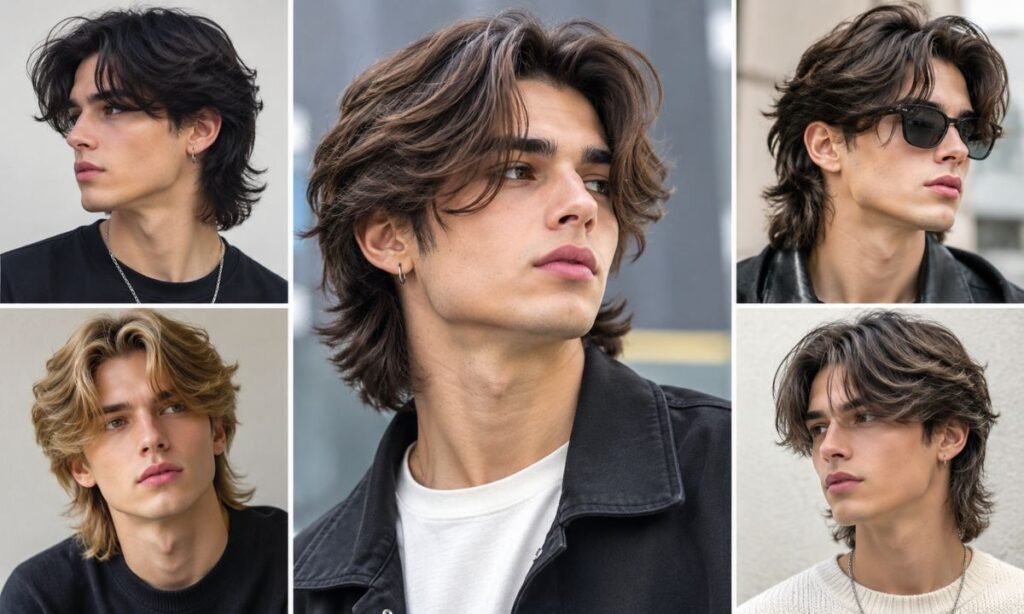
Wondering whether a curtain mullet can give you a modern look without making your hairstyle feel too extreme? The answer depends on how the front, sides, crown, and back are balanced. Curtain mullet haircuts combine a middle-parted front with longer hair at the back, creating a style that feels relaxed, textured, and noticeably different from an ordinary mullet.
The great thing about this haircut is its flexibility. You can wear it with a soft taper, a clean fade, natural sides, heavy layers, curls, waves, or straight hair. That means you don’t have to copy one exact version from a photo. Instead, you can adjust the length and texture to suit your face shape, hair type, daily routine, and the amount of styling you’re comfortable doing.
What Is a Curtain Mullet?
A curtain mullet combines the face-framing shape of a curtain hairstyle with the longer back associated with a mullet. The front normally separates around the middle, allowing two sections of hair to fall naturally toward each side of the face. Meanwhile, the crown and back keep additional length, which creates the recognizable mullet silhouette without making the front look overly traditional.
The difference between a standard mullet and a curtain version is mainly the front shape. A classic mullet can have a short or textured front, while a curtain mullet puts more attention on the center part and face-framing sections. Depending on the haircut, the sides can stay relatively natural or receive a low taper, mid fade, burst fade, or even a skin fade.
Another advantage is how easily the style changes with texture. Straight hair can produce a cleaner curtain effect, while wavy or curly hair creates a softer and more relaxed appearance. If your hair is thick, strategic layering can reduce unnecessary weight, while fine hair usually benefits from keeping enough density through the top and ends.
Why Is the Curtain Mullet So Popular?
The curtain mullet has become popular because it combines two recognizable hairstyle ideas without forcing them into a single rigid shape. The curtain front gives the haircut a softer appearance around the face, while the longer back adds personality and movement. This makes it possible to create anything from a subtle everyday haircut to a much bolder fashion-focused style.
Another reason people choose this haircut is customization. Someone with straight hair might prefer a layered curtain mullet with a clean taper, while someone with naturally wavy hair may want a shaggy version with more length at the back. You can also control how noticeable the mullet looks by changing the amount of contrast between the sides, crown, and nape.
The haircut also photographs well from different angles because the front and back offer different shapes. From the front, the middle part creates a recognizable frame around the face. From the side and rear, the layers and longer nape provide movement, giving the hairstyle a more interesting profile than many conventional short cuts.
Curtain Mullet Haircut Styles
Classic Curtain Mullet
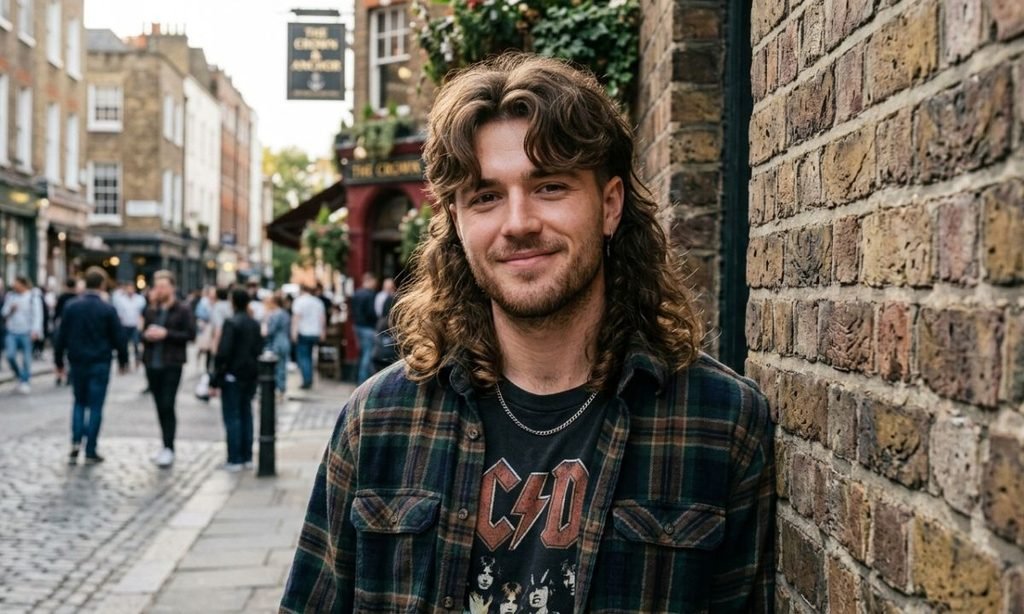
The classic curtain mullet keeps the defining features simple, with a noticeable center part at the front and gradually longer hair toward the back. The curtains usually fall around the forehead, temples, or cheek area, depending on how much length you prefer. The sides can remain moderately full, which creates a softer transition into the longer nape.
This version is a good starting point if you’re interested in the trend but don’t want an aggressive fade. Ask your barber to create natural layers instead of removing too much weight from the sides. A small amount of styling cream can then help the curtains separate naturally while keeping the longer back controlled.
Textured Curtain Mullet
A textured curtain mullet uses layers and separated ends to give the haircut more movement. Instead of allowing the hair to fall in one heavy block, the barber creates different lengths through the crown and back. This makes the haircut appear lighter and more dynamic, particularly when the hair already has natural waves or bends.
The textured finish can also make styling easier because the haircut does some of the work itself. After washing, you can apply a small amount of texture cream or lightweight styling product and shape the curtains with your fingers. Avoid applying too much product because excessive buildup can make the layers look heavy and remove their natural movement.
Low Taper Curtain Mullet
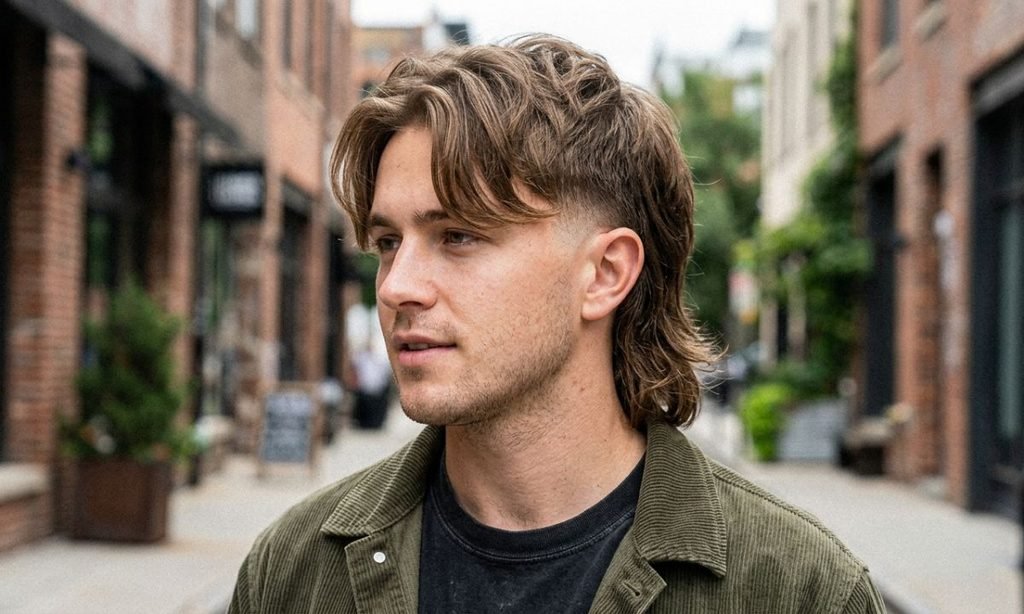
The low taper curtain mullet is one of the more wearable versions for everyday life because the taper stays relatively close to the ears and neckline. The longer top and back remain the main focus, while the lower sections receive a cleaner finish. This creates a noticeable mullet shape without making the haircut look overly dramatic.
It works especially well for someone who wants a modern hairstyle that can still look neat in different settings. The barber can keep the taper subtle and preserve enough weight around the temples to connect the curtains with the rest of the haircut. If you want a softer appearance, combine the low taper with longer layers and natural texture.
Mid Fade Curtain Mullet
A mid fade curtain mullet creates more contrast than a low taper because the fade begins higher around the sides. This makes the longer top and back appear more prominent, giving the hairstyle a sharper barbershop character. The middle-parted curtains help balance that contrast by adding softness around the face.
This version is particularly suitable if you prefer a haircut with a clearly defined shape. However, the fade should not overpower the longer sections, because the haircut can lose its flow if too much hair is removed. Ask your barber to preserve enough crown length so the transition into the back remains smooth and intentional.
Burst Fade Curtain Mullet
The burst fade curtain mullet is designed around a curved fade that follows the area surrounding the ear. Instead of removing the entire side section, the fade creates a rounded shape while leaving more hair toward the back. That structure works naturally with a mullet because the longer rear section remains clearly visible.
The curtain front gives the haircut an additional layer of personality and makes the overall result less one-dimensional. This style looks especially interesting with wavy or textured hair because the natural movement contrasts with the clean fade. For a stronger look, keep the nape longer and allow the crown layers to connect naturally with it.
Skin Fade Curtain Mullet
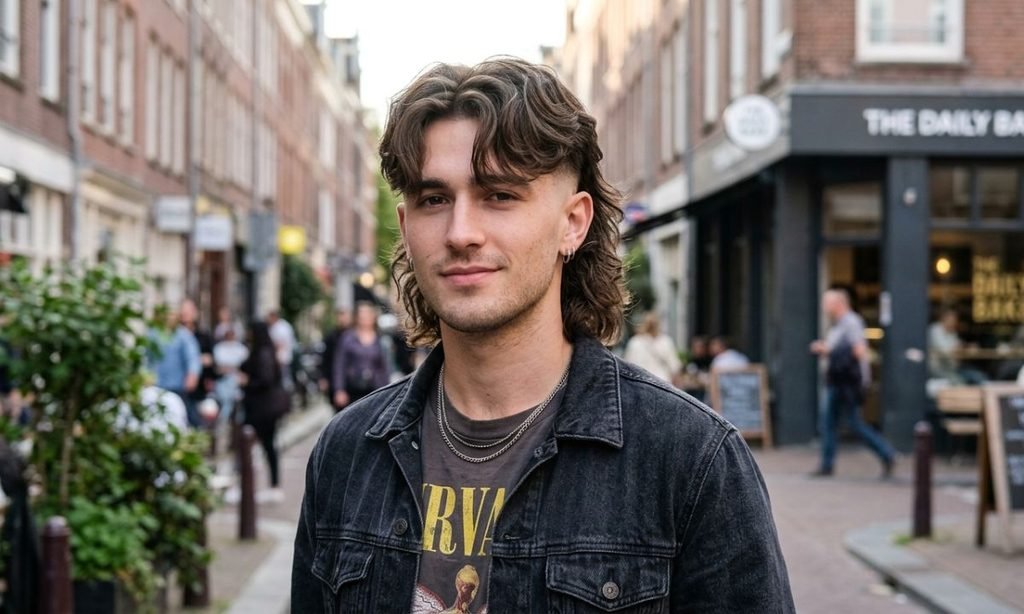
A skin fade curtain mullet creates one of the strongest contrasts in this hairstyle family. The sides are reduced very close to the skin while the top, curtain sections, and back remain considerably longer. This makes the haircut immediately noticeable and gives it a sharper, more fashion-forward appearance.
Because the sides are so short, regrowth becomes visible sooner than with softer versions. You may need more frequent barber visits if you want the fade to remain crisp. The top and back should also be carefully proportioned because a strong skin fade requires enough length above it to prevent the haircut from looking disconnected.
Korean Curtain Mullet
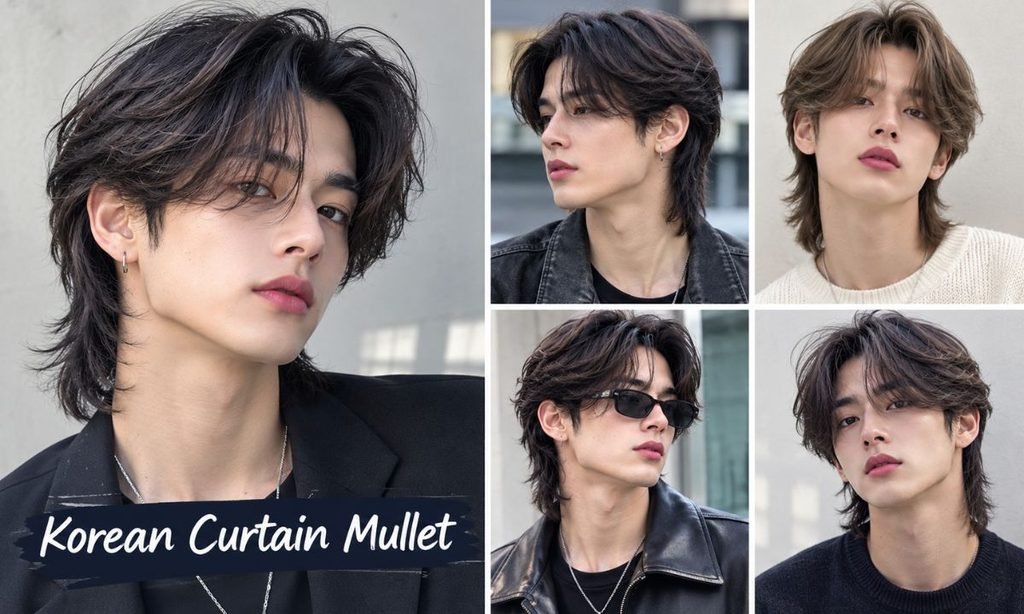
The Korean curtain mullet generally focuses on soft movement, face framing, and controlled layering rather than extremely harsh contrast. The front often falls naturally around the forehead and cheeks, while the back contains flowing layers that create a relaxed silhouette. Straight and slightly wavy hair can work particularly well with this approach.
The key is avoiding an overly stiff finish. A lightweight styling cream or soft texture product can help separate the curtains while keeping them flexible. Instead of forcing every strand into place, allow some natural movement around the face and crown so the hairstyle keeps its effortless character.
Shaggy Curtain Mullet
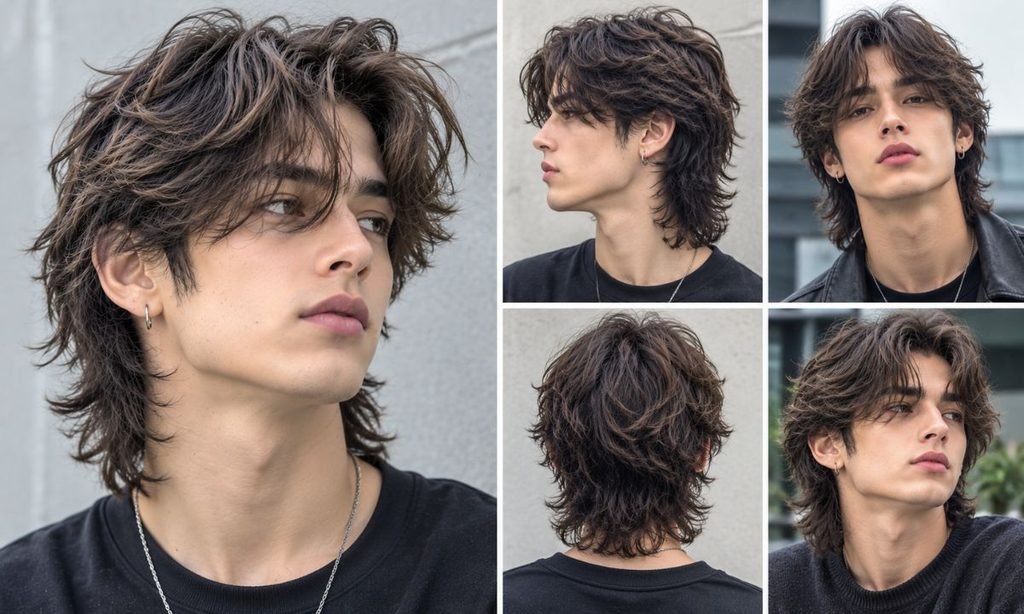
A shaggy curtain mullet combines the loose texture of a shag with the longer rear profile of a mullet. The front curtains blend into multiple layers around the crown, sides, and back, producing a hairstyle that looks deliberately relaxed. It is especially attractive when your hair already has natural waves or uneven texture.
This version does not need to look perfectly symmetrical or polished. In fact, a little irregularity helps create the carefree appearance that makes the style work. Use a lightweight styling cream or texture spray, then shape the hair with your fingers rather than repeatedly brushing it into a rigid position.
Short Curtain Mullet
A short curtain mullet keeps the overall silhouette compact while still retaining the defining center part and longer back. The nape does not extend dramatically, making this a practical option for anyone who likes the concept of a mullet but isn’t ready for significant length. The front can still create a noticeable frame around the forehead.
This version also requires less maintenance than a long mullet because there is less hair to manage. Your barber should leave enough length in the curtain sections to create a visible middle part. The back can then be layered gradually so it feels like part of the haircut rather than a separate section attached to it.
Long Curtain Mullet
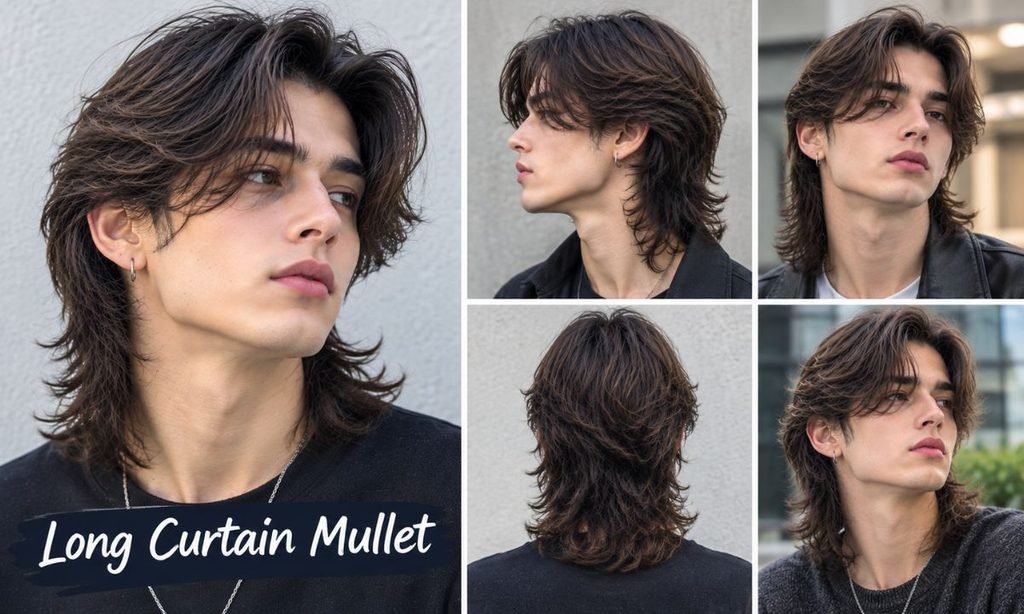
A long curtain mullet makes the extended back one of the main features of the hairstyle. The front curtains may reach toward the cheekbones or jaw, while the layers continue down through the nape. This creates plenty of movement and gives the haircut a stronger alternative appearance.
Longer hair needs thoughtful layering because excess weight can make the hairstyle look flat. Thick hair usually benefits from removing weight strategically, while fine hair should retain enough density to keep the ends from appearing thin. Regular conditioning also becomes more important as the length increases.
Curly Curtain Mullet
A curly curtain mullet uses natural curls to create volume and movement around both the face and back. Rather than forcing the center part to look perfectly straight, the curls can form a softer opening that follows their natural pattern. The back can retain extra length so the curls develop a fuller silhouette.
Curly hair also requires careful consideration of shrinkage. Hair that looks long while wet can appear significantly shorter after drying, so the cutting process should account for the curl pattern. A curl cream or lightweight leave-in product can help define the shape without making the hair stiff or overly shiny.
Wavy Curtain Mullet
A wavy curtain mullet is naturally suited to people who already have movement in their hair. The waves can create a soft middle part while giving the crown and back a textured appearance without requiring excessive styling. This makes the haircut feel relaxed while still maintaining a recognizable structure.
For daily styling, use a small amount of lightweight product and encourage the waves with your fingers. Avoid repeatedly brushing the hair after it dries because that can separate the wave pattern and create unwanted frizz. A little natural irregularity often makes this version look better.
Straight Hair Curtain Mullet
Straight hair gives the curtain mullet a cleaner and more defined appearance because the middle part is easy to see. It also makes every layer more visible, so the haircut needs careful shaping. If the layers are too heavy or the ends are poorly connected, straight hair can make those problems more noticeable.
To add movement, ask your barber for strategic layering rather than excessive thinning. When styling, blow dry the roots away from the center part and use your fingers to guide the front sections. A lightweight texturizing product can then create separation without making the hair appear greasy.
Wolf Cut Curtain Mullet
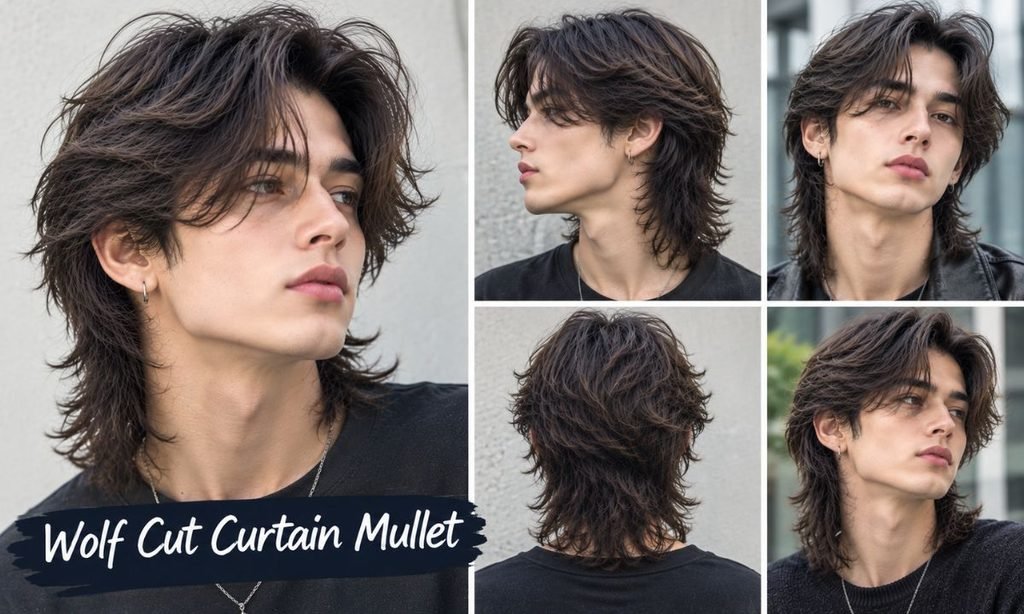
The wolf cut curtain mullet combines the heavier layering of a wolf cut with the longer rear shape of a mullet. The crown often carries noticeable volume, while the curtain sections frame the face and the back maintains a flowing layered structure. It is a good option for someone who enjoys a more expressive haircut.
This style works particularly well with wavy and textured hair because the natural bends make the layers more visible. If your hair is straight, you may need some styling to reproduce the same amount of movement. The important detail is maintaining enough length through the back so the hairstyle doesn’t turn into an ordinary layered crop.
Layered Curtain Mullet
The layered curtain mullet depends heavily on controlled transitions between different lengths. Instead of relying entirely on a fade, the barber uses layers through the top, sides, crown, and back to create movement. This makes the style softer and more connected than many high-contrast versions.
It can work across several hair types when the layering matches the natural density. Thick hair may need internal weight removal, while fine hair often looks better when the ends retain enough fullness. The final goal should be movement without making the haircut look excessively thin.
Razor Cut Curtain Mullet
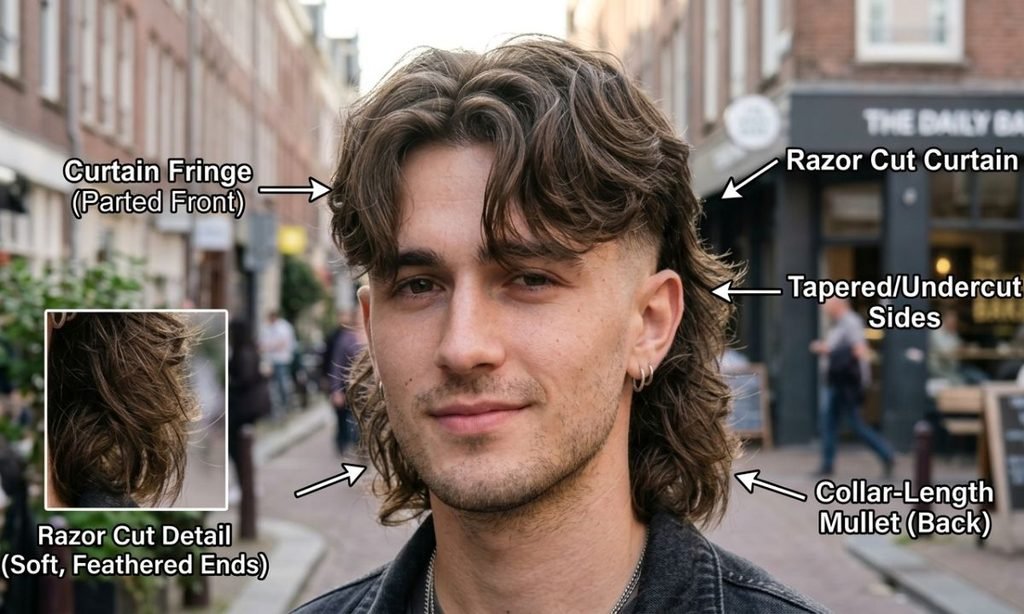
A razor cut curtain mullet uses a razor technique to create lighter, more feathered ends. This can make thick or straight hair feel more mobile and give the haircut a slightly sharper fashion edge. The effect is particularly noticeable around the curtains and longer rear layers.
However, razor cutting isn’t automatically better for every hair type. Very fine or fragile hair may need more conservative texturing to preserve fullness. Talk with your barber about your hair’s density before choosing this approach, especially if your main goal is a fuller appearance.
Messy Curtain Mullet
The messy curtain mullet is designed to look relaxed rather than perfectly arranged. The curtains separate naturally around the middle, while the crown and back contain irregular layers that create movement. It works well for people who don’t want to spend a long time making every strand look identical.
The best messy finish still needs a good haircut underneath it. Apply a small amount of matte styling cream or texture spray and work it through the hair with your hands. Once the basic shape appears, stop styling instead of continuing to manipulate it until everything becomes flat.
Taper Fade Curtain Mullet
A taper fade curtain mullet keeps the areas around the sideburns and neckline clean while preserving more length across the top and back. It provides a neat appearance without the stronger contrast of a full mid or skin fade. This makes it a practical choice for someone who wants a modern haircut that remains relatively versatile.
The taper can also be adjusted according to your preference. A very subtle taper keeps the style soft, while a sharper taper creates more definition around the edges. Keep the crown and back connected so the longer sections continue to look intentional as they grow.
Undercut Curtain Mullet
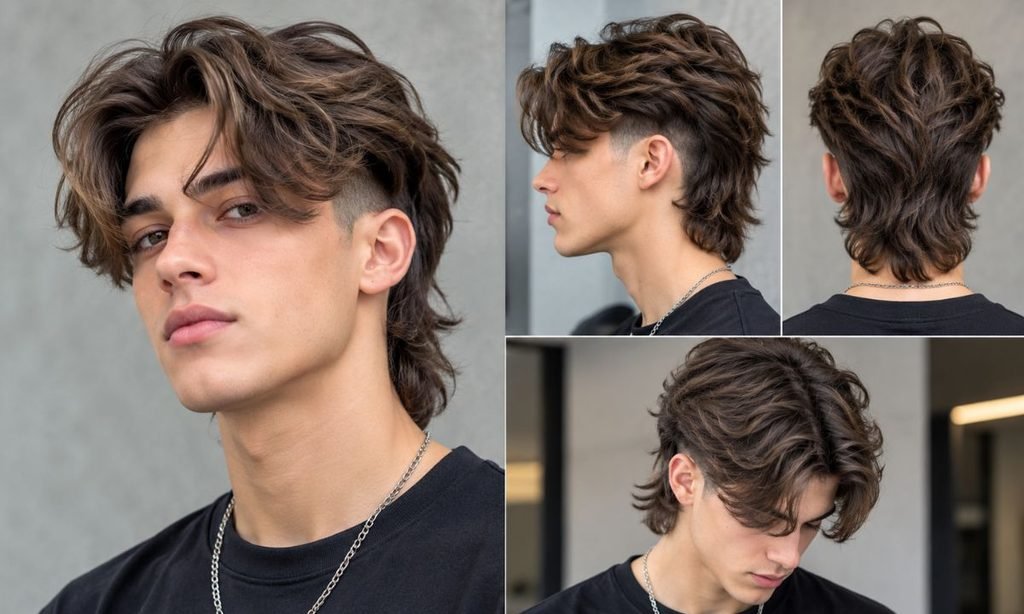
An undercut curtain mullet creates a much stronger separation between the longer hair on top and the shorter sides. This makes the hairstyle feel bold and deliberate, especially when the curtains are left long enough to create movement around the face. The back can then extend into a dramatic layered nape.
Because the contrast is strong, proportions matter. If the undercut is too high or the top isn’t long enough, the hairstyle can appear disconnected. A good barber should consider your head shape and natural hair growth before deciding exactly where the undercut should begin.
Fringe Heavy Curtain Mullet
The fringe heavy curtain mullet places more emphasis on the front of the hairstyle. The curtain sections remain thick and prominent, often extending toward the cheekbones or jaw depending on the desired look. Meanwhile, the back retains enough length to maintain the mullet identity.
This variation can work especially well if you want the hairstyle to frame your face rather than simply create height on top. Thick hair may require controlled layering through the front so the curtains don’t become too heavy. The final shape should move away from the center rather than hanging like a solid block.
Voluminous Curtain Mullet
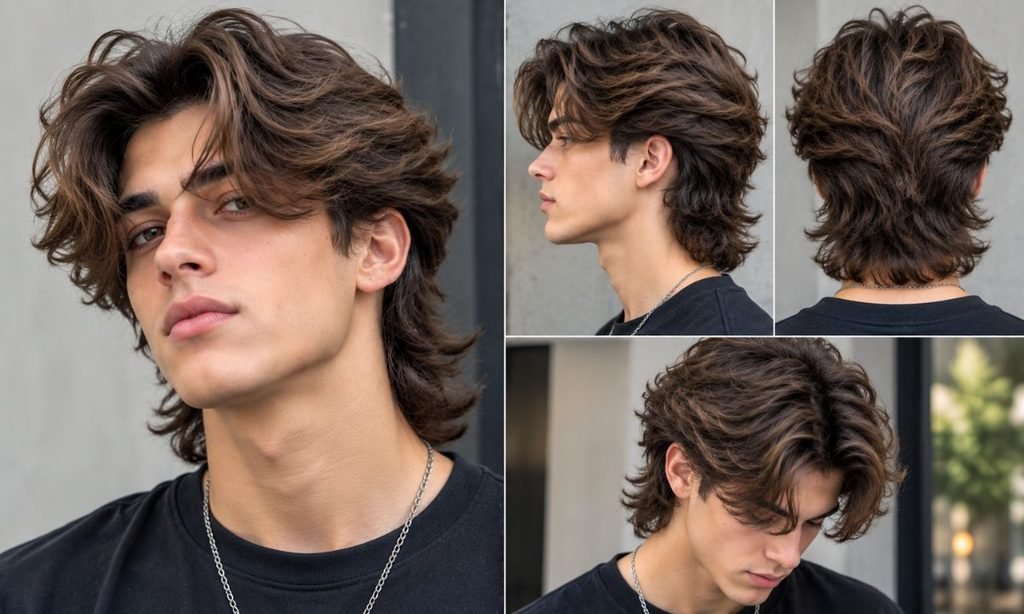
The voluminous curtain mullet focuses on creating fullness through the crown and upper sections. The curtains open around the middle while the crown receives enough lift to make the hairstyle appear fuller. The back then carries that volume into longer layered sections.
This version can be particularly useful for people who enjoy a bigger hairstyle. Blow drying the roots upward and slightly away from the center can create additional lift. Use lightweight styling products because heavy waxes and creams can quickly pull the hair downward.
Soft Curtain Mullet
A soft curtain mullet reduces the harsh contrast often associated with modern mullets. The sides remain fuller, the curtain sections blend gently into the crown, and the back grows longer through gradual layers. The result feels more natural and less aggressive while still retaining the hairstyle’s recognizable character.
This can be a good entry point if you’re nervous about trying a mullet for the first time. You can always increase the contrast later by introducing a taper or fade. Starting softer also gives you a better idea of how the longer back works with your face and hair texture.
Modern Curtain Mullet
The modern curtain mullet updates the traditional shape through cleaner proportions and more intentional layering. The front keeps the recognizable middle part, while the sides may feature a subtle taper or fade. The back remains longer, but the layers are shaped so the hairstyle looks deliberate rather than simply grown out.
This version works across a wide range of personal styles because the level of contrast can be changed easily. A soft taper creates a quieter appearance, while a burst or skin fade makes the haircut much more noticeable. Texture through the crown can then add movement without requiring excessive styling.
Curtain Mullet With Highlights
Highlights can make the layers of a curtain mullet much easier to see. Lighter pieces around the curtains, crown, and back catch the light and create additional depth. This can be especially effective on medium or longer hair where there are enough layers for the color variation to become visible.
The best results usually keep the color connected to the natural base instead of creating too much contrast. Subtle highlights can emphasize movement without becoming the main feature of the haircut. If you’re choosing this option, consider how the color will look as the hair grows and how often you’re willing to maintain it.
Who Should Try a Curtain Mullet?
A curtain mullet can work with many face shapes, but the haircut should be adjusted rather than copied exactly. The position of the middle part, the length around the cheeks, the width of the sides, and the amount of volume at the crown can all change how your face appears.
Your hair texture is equally important. A style that looks effortless on naturally wavy hair may require daily blow drying on very straight hair. Similarly, curly hair may need additional length because the curls shrink as they dry. The best haircut is therefore the one that works with your natural characteristics rather than fighting them.
Oval Faces
Oval faces usually have balanced proportions, which makes them adaptable to many curtain mullet variations. You can experiment with short curtains, long face-framing sections, fades, tapers, or natural sides without needing to correct a major imbalance.
A classic or textured version can create a particularly natural result. If your face already appears long, avoid adding excessive height at the crown because it can make the overall shape look more elongated. Moderate volume and controlled side movement usually create a balanced appearance.
Round Faces
Round faces can benefit from curtain sections that create additional vertical movement around the forehead and cheeks. A slightly longer front can help draw the eye downward, while a low taper or moderate fade can reduce unnecessary width around the sides.
Try opening the curtains slightly above the cheekbones rather than allowing them to spread too widely. Layering through the crown can also introduce height without making the hairstyle look exaggerated. The goal isn’t to hide the face but to create more balanced visual proportions.
Square Faces
Square faces often have a stronger jawline and more defined cheek structure. A curtain mullet can soften that appearance by introducing movement around the forehead, temples, and sides of the face.
Wavy or textured layers can work particularly well because they prevent the haircut from looking overly rigid. You can keep the sides moderately full for a softer finish or choose a burst fade when you want stronger contrast around the head.
Heart-Shaped Faces
Heart-shaped faces tend to appear wider through the forehead and narrower toward the chin. Longer curtain sections can help distribute visual weight around the middle of the face, while soft layers can make the transition toward the jaw feel more balanced.
Avoid creating excessive height at the crown if your forehead already appears prominent. A softer layered back and moderate curtain length can provide a more proportional appearance without covering the face completely.
How to Style a Curtain Mullet
Start with freshly washed hair and gently towel dry it until it is damp rather than soaking wet. Create a middle part with your fingers or a comb, then apply a lightweight mousse, styling cream, or texture spray based on your hair type. Avoid using too much product at this stage because you can always add more later.
Blow dry the curtain sections away from the center while using your fingers to guide them into place. Move the airflow from the roots toward the ends, and create gentle lift around the crown if you want more volume. For wavy or curly hair, you can reduce heat and allow the natural pattern to form instead of forcing the hair straight.
Once the front is shaped, work through the back and encourage the longer layers to move naturally. A small amount of matte cream can provide separation for straight hair, while curl cream can help define naturally curly sections. Finish with a flexible hold product only if your hairstyle needs extra control throughout the day.
How to Choose the Right Curtain Mullet
Choosing the right version starts with your natural hair rather than the haircut you happen to see online. Look at your density, texture, growth pattern, and the amount of time you realistically spend styling your hair. A complicated cut isn’t useful if you don’t enjoy maintaining it every morning.
You should also decide how much attention you want the haircut to attract. A soft curtain mullet with a low taper looks relatively subtle, while a skin fade, undercut, or long layered back creates much stronger contrast. Being honest about your lifestyle will make it easier to choose a version you’ll actually enjoy.
What to Tell Your Barber
Taking a reference picture is useful, but don’t simply hand over the phone and expect the exact result. Explain what you like about the image, whether it’s the curtain length, fade, crown volume, texture, or longer back. This gives your barber a clearer idea of which elements matter most to you.
For example, you could say that you want a natural middle part, medium-length curtains, layered movement through the crown, shorter sides, and a longer nape. Then explain whether you want a low taper, mid fade, or natural sides. Clear instructions reduce the chance of ending up with a haircut that technically resembles a mullet but doesn’t match your preferred style.
Curtain Mullet vs Similar Haircuts
Several modern hairstyles can look similar to a curtain mullet, especially when the hair is heavily layered. A wolf cut usually spreads more layers throughout the head, while a shag focuses strongly on texture and loose movement. A traditional mullet, meanwhile, doesn’t necessarily include a middle-parted curtain front.
| Haircut | Front Shape | Side Treatment | Back Shape |
| Curtain Mullet | Middle-parted curtains | Taper, fade, or natural | Longer and layered |
| Traditional Mullet | Short or flexible | Usually shorter | Noticeably longer |
| Wolf Cut | Layered fringe or curtains | Fuller and textured | Heavily layered |
| Shag | Fringe or curtain | Layered | Soft and textured |
| Two Block | Longer top | Short underneath | Usually controlled |
Understanding these differences can save you from showing your barber a picture of a wolf cut when what you actually want is a curtain mullet. The silhouettes overlap, but the structure isn’t identical. If you’re unsure, explain which areas you want longer and shorter instead of relying only on the hairstyle name.
How Often Should You Trim a Curtain Mullet?
A curtain mullet often benefits from a shape refresh every four to six weeks, although the exact timing depends on the version you choose. A skin fade or mid fade will usually need attention sooner because the shorter sides reveal regrowth quickly. A softer, longer style can generally tolerate more growth before the shape becomes noticeably different.
If you’re growing the back, tell your barber that preserving length is important. You may only need the curtains, sides, neckline, and layers cleaned up while allowing the nape to continue growing. This approach keeps the haircut looking intentional without repeatedly removing the length you’re trying to build.
Maintenance Tips
The easiest way to maintain a curtain mullet is to choose a version that matches your natural texture. Wavy hair may need only a small amount of product, while straight hair can require blow drying to establish the curtains. Curly hair often benefits from curl-friendly products and gentle handling that preserves the natural pattern.
Keep the longer sections conditioned so they remain manageable and don’t become rough at the ends. Avoid applying heavy wax or gel directly to the curtains unless you want a noticeably slick finish. If you use heat regularly, protect the hair and avoid excessively high temperatures that can leave the longer layers dry and difficult to style.
Common Mistakes to Avoid
One of the biggest mistakes is removing too much length from the back during the first cut. A mullet depends on that longer rear section, so cutting it too short can make the hairstyle lose its identity. Another common problem is making the sides extremely short without leaving enough length through the crown to create a natural connection.
Over-thinning is another issue worth discussing with your barber. Thick hair may need some weight removed, but aggressive thinning can make the ends look weak or uneven. Fine hair can lose even more visual density when over-texturized, while curly hair may react unpredictably when too much structure is removed.
Is a Curtain Mullet Easy to Maintain?
The maintenance level depends heavily on the specific version you choose. A soft, layered curtain mullet with natural sides can be relatively simple because the haircut relies on natural movement. A skin fade version requires more frequent visits, while long curly versions may require more time for washing, conditioning, and styling.
Before choosing your haircut, think about your actual morning routine. If you have five minutes to style your hair, a heavily layered style that needs twenty minutes every day may become frustrating. Choose a cut that looks good with the amount of effort you’re genuinely willing to give it.
Best Products for Styling a Curtain Mullet
The right product depends on the texture and finish you want. Lightweight mousse can add volume to fine or straight hair, while texture spray can create separation without making the haircut feel heavy. Matte styling cream works well when you want a natural finish with moderate control.
Curly and wavy hair may respond better to curl cream or a lightweight leave-in product. If your hair is thick, avoid loading it with heavy wax because that can flatten the layers and make the curtains look greasy. Start with a small amount, work it through your hands, and add more only if the hairstyle genuinely needs it.
FAQs: Curtain Mullet
What is a curtain mullet?
A curtain mullet combines a middle-parted curtain front with longer, layered hair at the back. The sides can be natural, tapered, or faded depending on the desired level of contrast.
Is a curtain mullet suitable for all hair types?
A curtain mullet can be adapted for straight, wavy, curly, thick, and fine hair. The important part is adjusting the length and layering to match your natural texture and density.
How do you style a curtain mullet?
Create a center part, use a lightweight styling product, and blow dry the front away from the middle. Shape the longer back with your fingers while allowing the natural texture to remain visible.
What face shape suits a curtain mullet best?
Oval faces can usually accommodate many versions, while round, square, and heart-shaped faces may benefit from specific curtain lengths and layering. Your proportions matter more than following a fixed face-shape rule.
How often should you trim a curtain mullet?
Many people can refresh the shape every four to six weeks, but fade-based versions may need more frequent maintenance. If you’re growing the back, ask your barber to clean the shape without removing unnecessary length.
Final Thoughts
The curtain mullet haircut offers a useful middle ground between a relaxed layered hairstyle and a more noticeable modern mullet. Its defining feature is the combination of a middle-parted front with additional length through the back, but almost everything else can be customized to your preferences.
You can choose a low taper for a softer everyday finish, a mid fade for stronger contrast, or a burst fade when you want something more distinctive. Straight hair can create clean curtains, while waves and curls can provide natural texture without much styling. The right choice depends on your hair, face shape, routine, and personal comfort.
If you’re trying a mullet for the first time, starting with a softer version can make the transition easier. A low taper curtain mullet, layered curtain mullet, or wavy curtain mullet can introduce the shape without going straight to the most dramatic option. Once you understand how the longer back and curtain front work with your hair, you can always make the style bolder during your next visit.
