

You sit down in the barber’s chair, and he asks, “Low or mid?” Your mind goes blank. You know you want a clean cut, but the choice between a low taper fade and a mid taper fade feels bigger than it should. Pick wrong, and you’ll stare at it for weeks.
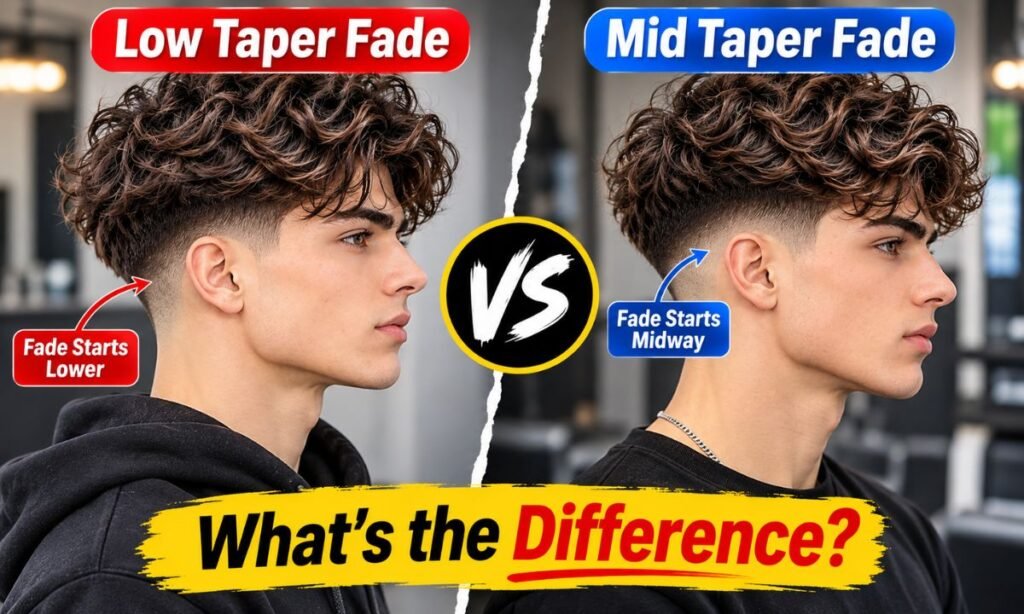
Here’s the short answer. A low taper fade starts near your ears and neckline, so it looks soft, neat, and easy to wear. A mid taper fade starts higher, around the temples, so it looks sharper and more styled. This guide breaks down the low taper fade vs mid taper fade debate step by step, so you can walk into the shop and say exactly what you want.
The short version
Think of the two cuts like a volume dial. The low taper fade sits near a 3 out of 10, and the mid taper fade sits closer to a 6. Both give you a clean finish, but they send very different signals. One whispers, and the other speaks up.
The low taper fade keeps most of your sides and back at a longer length and only trims the edges. The mid taper fade cuts shorter and higher, which creates more contrast against the hair on top. If you want a look that fits every room, start with low. If you want people to notice the cut, go mid.
What is a low taper fade?
A low taper fade begins just above the ear and follows your natural hairline. It wraps around the back and ends at the nape of your neck. The hair gets shorter as it moves down, but the change is slow and gentle. You won’t see a harsh line anywhere.
Most barbers start with a longer clipper guard near the top of the taper and step down to a shorter one near the bottom. This smooth blending is what makes the low taper fade feel so tidy. Since the fade sits low, most of your side hair stays full, and the cut works like a neat frame around your top style.
What is a mid taper fade?
A mid taper fade starts around the temple, roughly level with your eyebrows. From there, the hair shortens as it travels down toward the ears and neck. You see more skin and more shape, which gives the mid taper fade its fresh, modern look.
This is the cut most people picture when they say “clean fade.” The gradient shows up clearly from the side and back. It adds style without going all the way to a high fade, which can feel too bold for some guys. That balance is why many people call the mid taper fade the Goldilocks cut.
How the two look side by side
Place both cuts next to each other, and the difference jumps out. The low taper fade looks like a sharp, neat trim. The mid taper fade looks like a styled haircut that took planning. Your eye reads the higher fade as more intentional, even if both cuts take the same effort to make.
From the front, a low taper fade barely shows. You notice it mostly from the side and back. A mid taper fade shows from almost every angle because the fade climbs higher on your head. Picture an imaginary line around your skull. On a low taper, it sits near the ears. On a mid taper, it sits near the temples.
Which one looks more professional?
The low taper fade wins on pure conservative appeal. It looks like a barbershop classic and fits a business casual wardrobe without any fuss. Teachers, bankers, and lawyers wear it every day, and nobody gives it a second look. If you want a safe and polished cut, this is it.
That said, a well-made mid taper fade is far from unprofessional. It looks crisp and modern, and plenty of managers and designers wear it to the office. The real question is your workplace culture. A strict dress code leans toward low. A relaxed or creative space gives you room to go mid.
Which fade suits your face shape?
Your face shape matters more than most guys think. A round face often looks longer and slimmer with a mid taper fade because the higher fade adds height and definition. A low taper fade can sometimes make a round face look wider since it keeps volume at the sides.
Square faces handle both cuts well. A low taper fade softens a strong jawline, while a mid taper fade highlights it for a rugged look. Oval faces suit either one. Long or oblong faces usually look better with a low taper fade because it keeps width on the sides and stops the head from looking too tall.
Which one works better for your hair type?
Straight hair shows every blend line, so precision matters. A low taper fade hides small mistakes better, while a mid taper fade looks great only if your barber has steady hands. Curly hair and coily hair work well with both. A mid taper fade adds a clean contrast against textured curls, and a low taper fade keeps more volume for a softer finish.
Hair density plays a big role too. Fine or thin hair often looks fuller with a low taper fade because you keep more coverage on the sides. Thick hair does well with a mid taper fade since the shorter sides reduce bulk. Think about how much hair you have before you pick a height.
Pairing each fade with popular top styles
The right top style can make or break the cut. A low taper fade pairs well with a classic side part, a textured crop, or a longer quiff. These looks feel balanced and easy to manage, and the soft fade keeps the whole shape calm and natural.
A mid taper fade loves bolder tops. Try a pompadour, a French crop, or a curly top with clear shape. The higher fade gives these styles more separation, so the top really stands out. Want a middle path? A faux hawk works with either cut. Just ask your barber to match the fade height to the length of your top.
Maintenance: which one lasts longer?
The low taper fade grows out more gracefully. Since the fade is subtle, new growth blends in without a harsh line. Most guys stretch it to four or five weeks before it looks messy. That makes it a great pick if you hate frequent barber visits.
A mid taper fade needs more attention. The contrast shows up fast as the hair grows back, so most people book a touch up every two to three weeks. More visits mean more money too. If you want low upkeep, the low taper fade saves you both time and cash. If you love a crisp look, the mid taper fade is worth the effort.
Everyday styling and products
Good news: both cuts are easy to style at home. Start with a towel dry, then add a small amount of styling product. A little goes a long way. Too much product makes the fade look dirty and weighs down your top.
For a low taper fade with a side part, try a light pomade or cream. For a mid taper fade with texture, a matte clay or sea salt spray works well. Curly hair does best with a curl cream to fight frizz. Also keep your neckline and sideburns clean between visits. A small trimmer is worth owning for that quick tidy up.
Pros and cons at a glance
Every cut has trade-offs, and this quick table shows how the low taper fade and mid taper fade compare.
| Feature | Low Taper Fade | Mid Taper Fade |
| Look | Subtle and soft | Sharp and bold |
| Workplace friendly | Very | Mostly |
| Maintenance | Every 4 to 5 weeks | Every 2 to 3 weeks |
| Best for | Classic, conservative styles | Trendy, textured styles |
| Grow out | Smooth and easy | Noticeable fast |
The low taper fade’s biggest pro is simplicity, and its con is that it can look plain. The mid taper fade’s biggest pro is the style it gives you, and its con is the upkeep. Neither one is better in every case. They just serve different people and different routines.
How to ask your barber
Words matter in the chair. Say “low taper” or “mid taper” and name the guard number or length you want at the bottom. Better still, bring a photo. A picture clears up most confusion in seconds, and your barber will love the clear direction.
Tell your barber how much length you want to keep on top, and mention whether you prefer a skin fade at the bottom or a longer finish like a number 1 or 2 guard. Be honest about your daily routine too. If you won’t style your hair, say so, and a good barber will adjust the cut to fit your life.
Common mistakes to avoid
The biggest mistake is picking a cut that ignores your hair type. A thin patch with a very short fade shows more scalp than you want, so always think about hair density first. Another common slip is skipping the neckline. A rough neckline ruins even the best fade, so ask for a clean or natural finish and stick with it.
Don’t wait too long between visits either. A fade that overgrows looks tired fast, especially a mid taper fade. Book your next appointment before you leave the shop. Finally, don’t copy a photo blindly. A cut that suits another person’s face and hair may not suit yours.
Skin fade vs regular taper: what changes?
People mix up a taper and a skin fade all the time. A regular taper leaves short hair at the bottom, while a skin fade goes all the way down to bare skin. You can get either style at a low or mid height, which gives you four main options to think about.
A low skin fade looks edgy but still tidy, and a mid skin fade looks very sharp with strong contrast. If you’re new to fades, start with a regular taper. You can always go shorter next time, but you can’t add length back. Hair doesn’t grow overnight, so play it safe first.
What it costs and how long it takes
A taper fade usually costs a little more than a basic cut because the blending takes extra skill. Expect to spend around 30 to 45 minutes in the chair. A mid taper fade can take slightly longer because of the extra contrast work. Prices vary by city and shop, so ask before you sit down.
Think about the long game too. A cut that needs a trim every two weeks adds up over a year. If your budget is tight, the low taper fade is the kinder choice. If you value a sharp look and don’t mind the cost, the mid taper fade pays off every time you check the mirror.
Final verdict:
Choose the low taper fade if you like a clean, quiet look. It’s the safe pick for work, formal events, and guys who want low upkeep. It also suits fine hair and long faces. You’ll look neat without much effort, and it grows out well.
Choose the mid taper fade if you want a modern, defined style. It shines with textured tops, curls, and round faces, but it needs regular visits to stay sharp. Still stuck? Try the low taper fade first. It’s easier to adjust, and next time you can ask your barber to go a bit higher and see how it feels.
FAQs
Is a low taper fade the same as a low fade?
Not quite. A taper keeps some length at the bottom and blends softly. A fade usually goes shorter, often down to the skin.
Which is better for beginners, low or mid taper?
The low taper fade. It’s subtle, easy to maintain, and forgiving as it grows out.
How often should I get a mid taper fade?
Every two to three weeks keeps the lines sharp. You can stretch it to four weeks if you don’t mind a softer look.
Can I get a taper fade with long hair on top?
Yes. Both cuts pair well with long tops like a quiff or pompadour, and the contrast looks great.
Does a taper fade work on thinning hair?
It can. A low taper fade keeps more coverage on the sides, which helps balance a thinning crown.
Is a mid taper fade too bold for work?
Usually not. It’s clean and modern. Only very strict dress codes might frown on it.
So, which will it be, low or mid? Drop a comment and tell us your pick, and share this guide with a friend who can’t decide.

2 thoughts on “Low Taper Fade vs Mid Taper Fade: What’s the Difference?”