

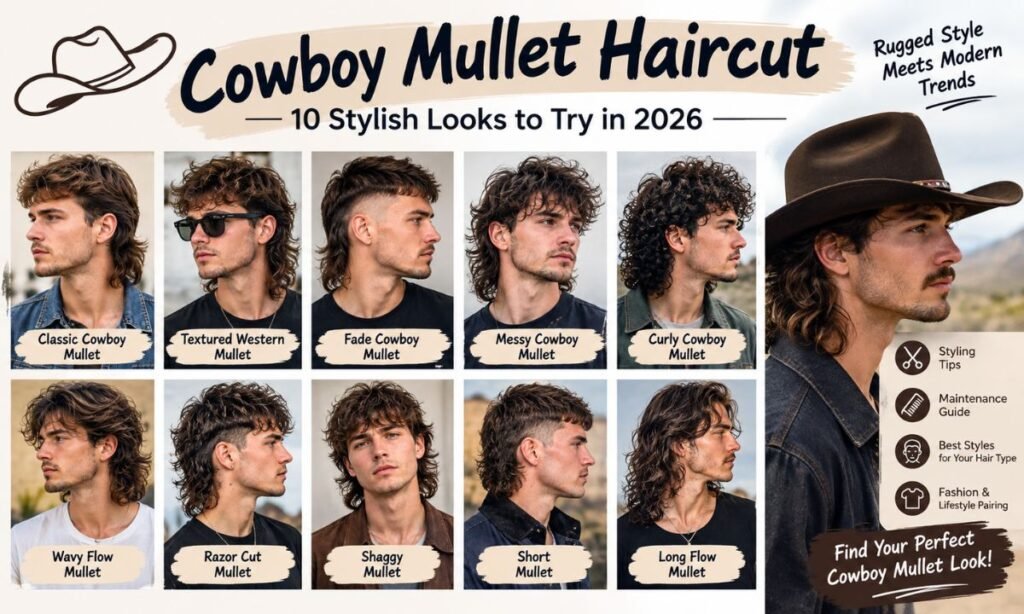
Looking for a haircut that feels rugged, modern, and easy to personalize? The cowboy mullet haircut combines shorter hair around the front and sides with extra length at the back, creating a relaxed Western-inspired look.
This hairstyle takes inspiration from classic country style but works just as well with modern streetwear, casual outfits, and everyday clothing. You can keep it neat with a taper, add texture for a messy finish, or let your natural curls create more movement.
The best part is that you don’t need one specific hair type or face shape to wear it. The right length, layering, and side detailing can make this haircut work for straight, wavy, curly, and thick hair.
In this guide, you’ll discover 10 cowboy mullet haircut styles worth considering in 2026. You’ll also learn how to choose the right variation, explain your preferred look to a barber, and maintain the shape as your hair grows.
10 Best Cowboy Mullet Haircut Styles
A cowboy mullet isn’t a single, fixed haircut. Some versions look clean and structured, while others have loose layers, natural movement, and a deliberately messy finish.
Before choosing a style, consider your hair texture, preferred maintenance routine, and how dramatic you want the back to look. These details help you find a cut that suits your everyday life rather than simply copying a photograph.
1. Classic Cowboy Mullet
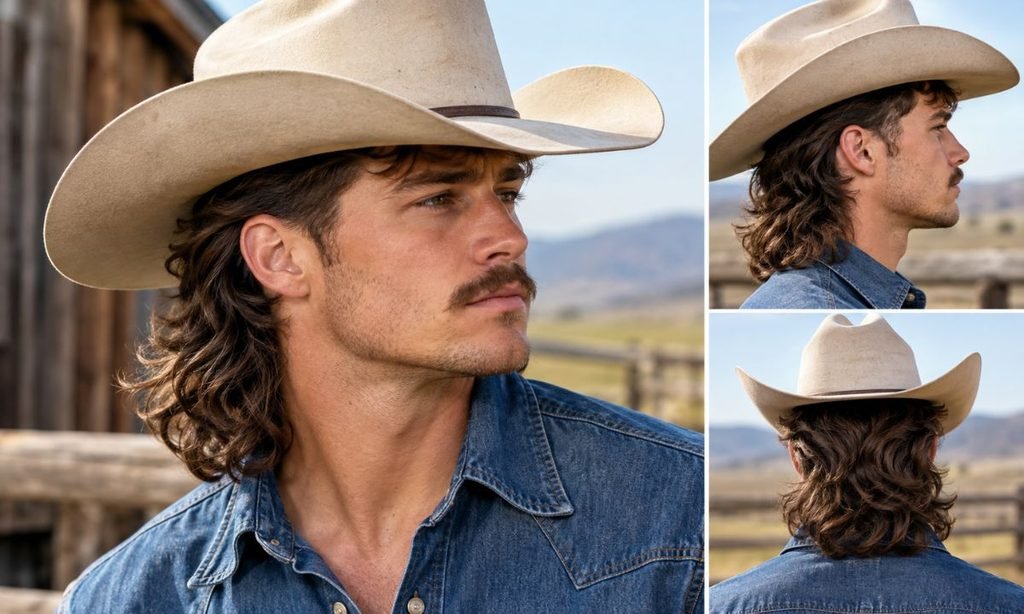
The classic cowboy mullet is a good starting point if you appreciate traditional Western style. It features shorter hair around the forehead and sides, with a longer back that creates the recognizable mullet silhouette.
Ask your barber for a balanced shape with softly blended sides and enough length at the back to show the contrast. You can leave the top relatively natural instead of adding a sharp fade or an exaggerated fringe.
This version works particularly well with denim jackets, plain T-shirts, boots, and other relaxed Western-inspired clothing. A small amount of styling cream can control flyaways without making your hair look stiff.
2. Textured Western Mullet
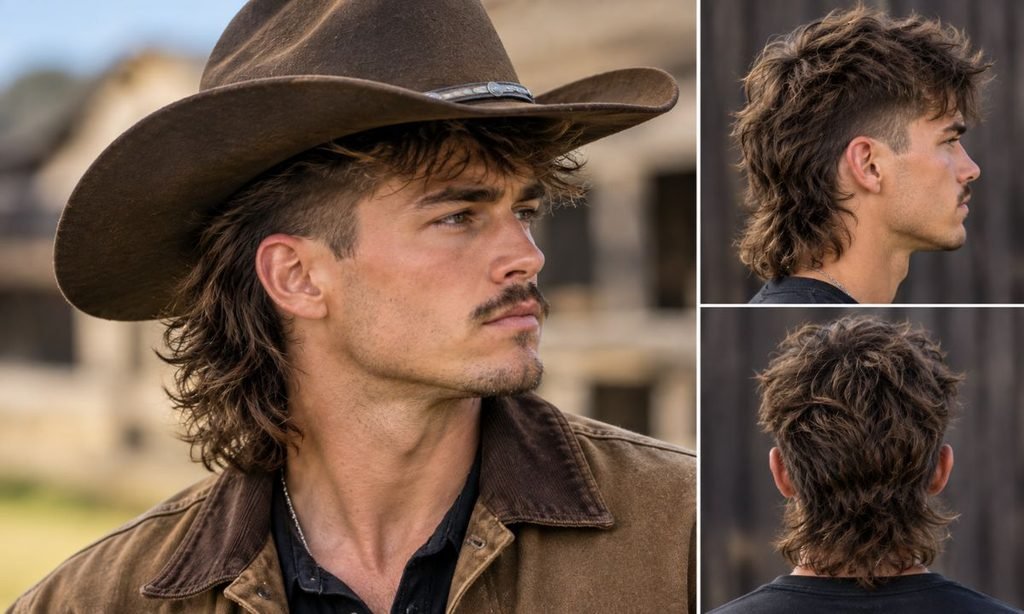
The textured Western mullet adds layers and separation to the classic shape. Instead of sitting flat against your head, the top has more movement, giving the haircut a casual finish that doesn’t look overly styled.
This variation suits men who want a modern mullet haircut with personality but don’t want a dramatic change around the sides. A barber can use point cutting or carefully placed layers to remove excess bulk and create definition.
For everyday styling, work a small amount of matte paste through dry or slightly damp hair. Use your fingers to lift the front and separate the layers rather than combing everything into a uniform shape.
3. Fade Cowboy Mullet
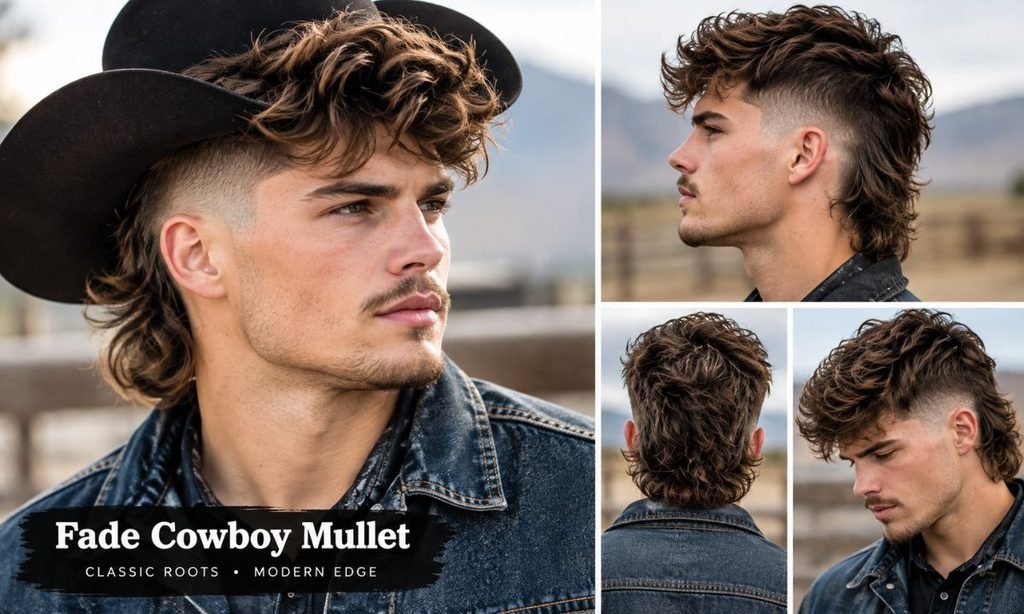
The fade cowboy mullet combines the longer back of a mullet with shorter sides that gradually blend toward the skin. The contrast makes the overall shape look cleaner, especially when the top has a little height or texture.
You can choose a low, mid, or high fade depending on how much contrast you prefer. A low taper fade creates a subtle finish, while a higher fade makes the transition more noticeable.
Tell your barber that you want the back length preserved. Taking the sides too high or cutting too much from the nape can change the overall silhouette and make the result look less like a traditional cowboy mullet.
4. Messy Cowboy Mullet
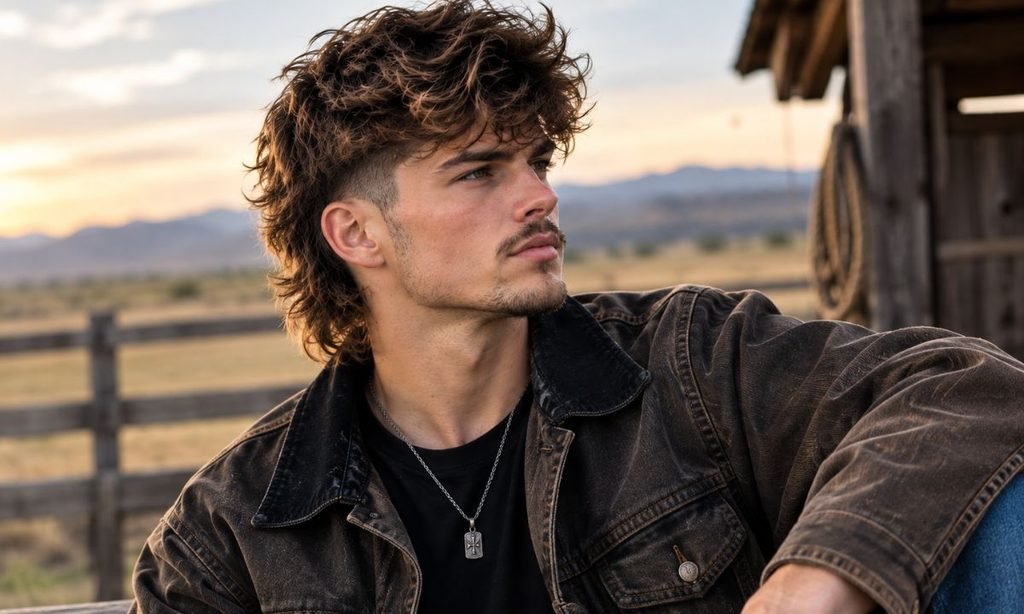
The messy cowboy mullet is ideal if you prefer an undone appearance instead of a carefully sculpted finish. Choppy layers, a slightly irregular fringe, and loose hair at the back give this version its relaxed character.
This style can be especially useful for thick hair because strategic layering helps reduce excess weight. However, the barber should consider your natural growth pattern before removing too much bulk or creating very short layers.
After washing, apply a lightweight texturizing product and let your hair dry naturally when possible. If your hair needs extra lift, use a blow dryer on a low setting while directing the front with your fingers.
The goal isn’t to make every strand sit perfectly. A little natural movement is what gives this haircut its appeal.
5. Curly Cowboy Mullet
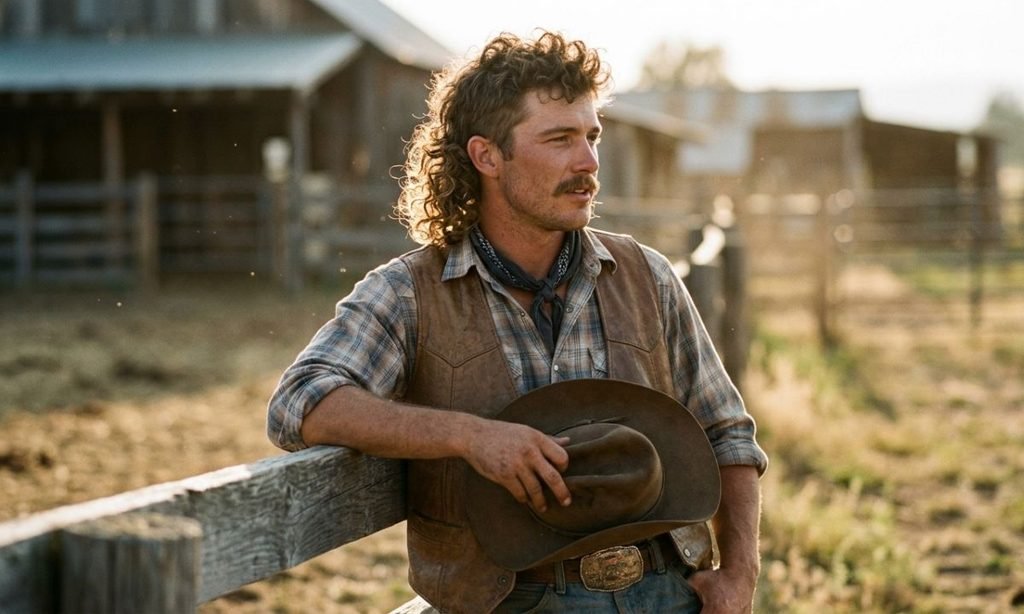
The curly cowboy mullet lets natural curls become part of the haircut instead of trying to flatten them. The top and back retain enough length for curls to form their own shape, while the sides can remain softly tapered or more closely cropped.
Curly hair often appears shorter when dry because curls contract as they form. For that reason, tell your barber how much length you want to keep and discuss how your curls behave after washing.
A curl-friendly styling cream or lightweight leave-in conditioner can help maintain definition and reduce frizz. Avoid brushing dry curls aggressively, since doing so can separate the curl pattern and create unnecessary volume.
If you want a more dramatic outline, combine this look with a subtle fade. For a softer result, keep the sides longer and allow the curls to blend naturally into the back.
6. Wavy Flow Mullet
The wavy flow mullet emphasizes movement rather than sharp contrast. Longer layers across the crown and back allow natural waves to fall loosely, creating the relaxed appearance associated with modern Western fashion.
This variation is a strong option for men with medium-length hair who don’t want to spend much time creating a precise finish. The barber can add layers that encourage the waves to sit naturally without making the ends look thin.
Apply a light styling cream to damp hair and let it air-dry. If your waves tend to flatten, scrunch the hair gently while drying instead of repeatedly combing it.
A wavy mullet also pairs well with an open flannel shirt, a simple T-shirt, or a denim jacket. The hairstyle provides movement without requiring an elaborate styling routine.
7. Razor Cut Cowboy Mullet
A razor cut cowboy mullet uses selected razor techniques to create softer edges and a more feathered appearance. The result can look lighter and less structured than a heavily blunt haircut.
This approach can work well for straight or wavy hair when the goal is to create movement around the crown and back. However, razor cutting isn’t suitable for every hair texture or condition, so ask your barber whether it fits your hair.
If your hair is already fine, excessive thinning can make the ends appear sparse. A skilled barber should remove weight selectively while preserving enough density to maintain the mullet’s shape.
Style the finished cut with a light cream or texture spray. Avoid heavy waxes if you want the layers to move freely.
8. Shaggy Cowboy Mullet
The shaggy cowboy mullet combines the length of a mullet with the loose layers of a shag haircut. It usually features a textured crown, softer sides, and a back that flows into several visible layers.
This style is worth considering if you prefer a vintage-inspired look with a modern edge. It can also suit men who want to grow their hair longer without losing all the structure around the face.
Ask your barber for layered movement rather than a perfectly even outline. You can keep the fringe short, let it fall toward your eyebrows, or sweep it to one side depending on your preference.
A small amount of texturizing cream is usually enough for daily styling. Letting the layers move naturally often looks better than forcing them into a rigid shape.
9. Short Cowboy Mullet
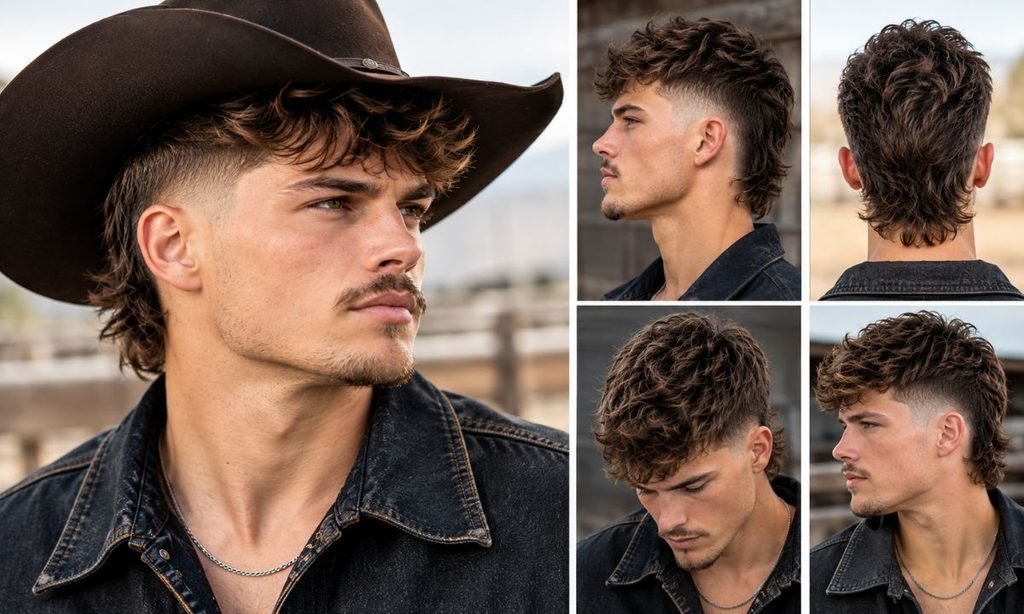
The short cowboy mullet keeps the recognizable shape without requiring long hair at the back. The top remains relatively short, the sides look tidy, and the nape retains enough length to establish the mullet profile.
This version is a practical option if you’re new to mullets or work in an environment where extremely long hairstyles might not suit your routine. You can also combine it with a low taper for a cleaner outline.
Tell your barber how visible you want the back to be from the side. A very subtle difference produces a conservative result, while a slightly longer nape makes the mullet more noticeable.
For styling, use a small amount of matte paste to add definition at the front. The shorter length generally makes the morning routine simpler than maintaining a long, layered version.
10. Long Flow Cowboy Mullet
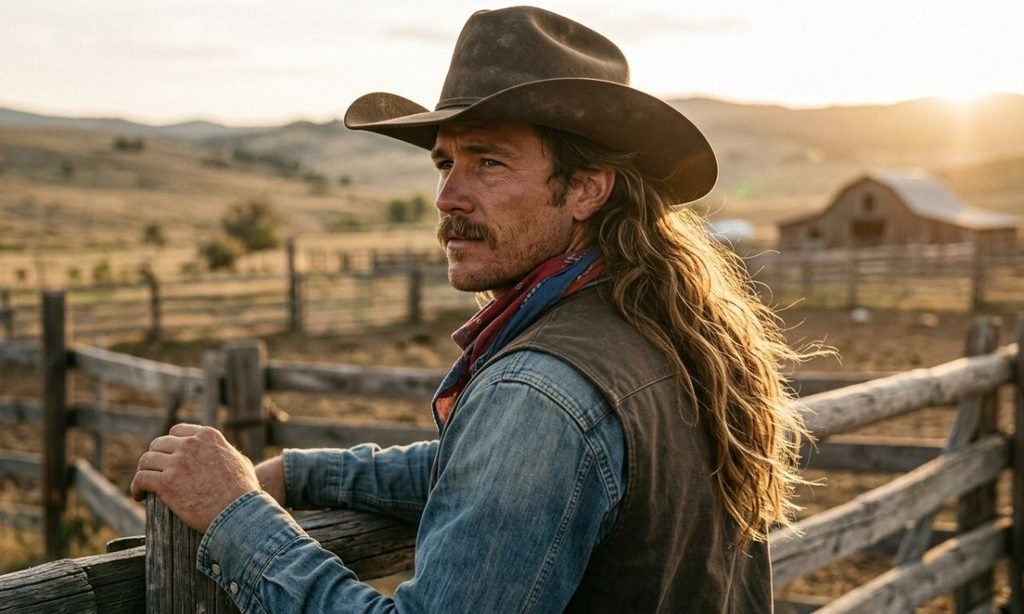
The long flow cowboy mullet is designed for people who enjoy noticeable length and natural movement. The back extends farther down the neck, while the crown and sides retain enough shape to keep the haircut from looking like one uniform length.
This variation creates a stronger Western-inspired appearance, particularly when paired with loose waves or layered ends. It can work with straight hair too, although the barber may need to add layers to prevent the back from hanging flat.
Growing a long mullet requires patience because the front, sides, and back don’t always grow into the desired proportions at the same time. Regular shaping appointments can help maintain the outline without sacrificing your progress.
Use conditioner to keep longer sections manageable, and detangle gently when needed. A lightweight styling product can add movement without weighing down the ends.
Cowboy Mullet vs. Mexican Mullet: What’s the Difference?
The cowboy mullet and the Mexican mullet share the same basic idea: shorter hair around the sides and a longer section at the back. However, the terms often describe different styling preferences rather than two completely separate haircut structures.
A cowboy mullet usually emphasizes a relaxed Western appearance, natural flow, and textured layers. A modern Mexican mullet may feature sharper contrast, a defined fringe, a tighter taper, or a more noticeable fade.
There is plenty of overlap between the two. Your barber can combine Western-inspired length with a taper fade Mexican mullet, a textured Mexican mullet, or even an Edgar Mexican mullet if you prefer a more defined front.
The name alone doesn’t determine the final result. Bring a reference photo and explain which details matter most, such as the fringe, side profile, crown texture, and length at the nape.
Mexican Mullet Styles You Can Borrow From
If you like sharper outlines, consider a burst fade Mexican mullet. The fade curves around the ear, leaving the back longer and creating a noticeable contrast between the sides and nape.
A low taper Mexican mullet offers a more understated option. It keeps the hair around the sideburns and neckline neat without removing too much length from the rest of the haircut.
You can also explore a curly Mexican mullet, a wavy Mexican mullet, or a Mexican mullet for straight hair. Each variation relies on the same general silhouette but adjusts the layers and finish to suit the hair’s natural behavior.
Other options include a disconnected Mexican mullet, a crop top Mexican mullet, and a slick back Mexican mullet. These combinations demonstrate how fringe length, separation, and styling direction can change the appearance of a mullet.
If you’re considering a Mexican mullet with taper or a Mexican mullet with burst fade, tell your barber exactly how much contrast you want. These terms can be interpreted differently between barbers, so a photo is more reliable than the name alone.
Fashion & Lifestyle Pairing
The right outfit can complement a cowboy mullet without making your entire appearance look like a costume. Start with everyday pieces that match your personal style, then add Western details only if you enjoy them.
Denim jackets, relaxed jeans, plain T-shirts, flannel shirts, and leather boots are natural choices. You can also wear the haircut with modern streetwear, including loose trousers, clean sneakers, and simple outerwear.
For a traditional Western feel, try a button-up shirt with a textured mullet and natural waves. If you prefer a contemporary look, a faded cowboy mullet with a clean T-shirt creates a sharper contrast.
Your lifestyle matters too. Someone who spends time outdoors may prefer a low-maintenance cut that doesn’t require constant product application. Someone who enjoys experimenting with fashion might choose a longer, layered style that offers more styling options.
There’s no need to match every detail. A single Western-inspired piece can complement the haircut while keeping the rest of your outfit simple.
How to Choose the Right Cowboy Mullet for Your Hair Type
Your hair texture affects how a mullet sits, how much volume it creates, and how often you’ll need to style it. Choosing the right variation starts with understanding those natural characteristics.
Straight hair: A Mexican mullet for straight hair or a classic cowboy mullet can benefit from layers that create movement. Without enough texture, longer sections may hang flat against the neck.
Wavy hair: A wavy mullet works well when the layers follow your natural wave pattern. Ask your barber to preserve enough length for the waves to form instead of cutting the back too short.
Curly hair: A Mexican mullet for curly hair or curly cowboy mullet should account for shrinkage. Discuss the dry length you want so the finished haircut doesn’t end up shorter than expected.
Thick hair: A Mexican mullet for thick hair may need carefully placed layers to remove excess weight. The goal is to create movement without making the ends look uneven or overly thin.
Fine hair: A shorter, more compact mullet can help maintain the appearance of density. Avoid excessive thinning at the back, and ask for a shape that works with your natural volume.
Hair texture isn’t the only consideration. Your preferred styling time, workplace expectations, and comfort with frequent barber visits can also help narrow your choices.
Which Face Shapes Suit a Cowboy Mullet?
A cowboy mullet can be adapted to different face shapes, but the placement of volume and the length of the fringe can change the overall balance. Rather than following strict rules, focus on the proportions you want to emphasize.
Oval faces: Most variations can work well because the face tends to have balanced proportions. You can experiment with a textured top, longer back, or subtle fade.
Round faces: A little height at the crown and cleaner sides may create a more elongated appearance. Avoid adding excessive width at the temples if you prefer a less rounded silhouette.
Square faces: Textured layers and a softer fringe can balance a strong jawline. A fade may also create a clean outline without removing the hairstyle’s rugged character.
Long faces: A lower-profile top and a fuller fringe may help balance the face’s length. Keeping some volume around the sides can also create a more even appearance.
Heart-shaped faces: A textured top with moderate side volume can help balance a broader forehead and narrower chin. The best result depends on your hairline and preferred length.
These are styling suggestions, not strict rules. A barber can adjust the proportions after looking at your hairline, head shape, and natural growth patterns.
Styling & Maintenance Tips
A cowboy mullet doesn’t need an elaborate routine, but regular care helps maintain its shape. The amount of effort depends on your hair texture, chosen length, and how precise you want the sides to look.
Use the Right Styling Products
Choose products based on the finish you want rather than buying everything at once. Matte paste works well for separation, while lightweight cream can help control frizz and define waves.
For curls, consider a curl cream or leave-in conditioner that suits your hair. Fine hair usually benefits from lighter products, while thick hair may handle a little more hold.
Start with a small amount and add more only when necessary. Too much product can flatten the crown, weigh down longer sections, and make the hair appear greasy.
Dry Your Hair Without Losing Its Texture
After washing, gently squeeze excess water from your hair with a towel. Avoid rough rubbing, especially if you have curls or waves that become frizzy easily.
If you’re using a blow dryer, choose a moderate or low heat setting. Direct the front and crown with your fingers or a brush, then allow the longer back to fall naturally.
You don’t need to make every strand perfect. A little movement often gives a cowboy mullet its relaxed finish.
Keep the Fade and Nape Clean
Faded sides usually need more frequent attention than longer, layered styles. As the hair grows, the contrast can become less defined around the ears and neckline.
If you want a sharp outline, ask your barber how often the sides need refreshing. The ideal interval depends on your growth rate and how short the fade is.
Avoid trimming the longer back yourself unless you’re comfortable maintaining its shape. Removing too much length can change the proportions and make the haircut harder to grow out evenly.
Wash and Condition According to Your Hair
Your washing routine should reflect your scalp and hair texture rather than a fixed schedule. If your hair feels dry, a suitable conditioner can help improve softness and manageability.
Longer sections may tangle more easily, particularly if they’re wavy or curly. Use a wide-tooth comb when appropriate and work through knots gently, starting near the ends.
If you use styling products frequently, wash them out as needed to prevent buildup. A clean scalp and manageable hair make everyday styling easier.
How to Ask Your Barber for a Cowboy Mullet
The easiest way to explain your preferred haircut is to bring two or three reference photos. Choose pictures that show the front, side, and back so your barber can understand the entire shape.
Explain which parts you want to keep, rather than relying only on the phrase “cowboy mullet.” For example, you might want a textured crown, a low taper around the ears, and a longer back that reaches the top of your collar.
Discuss the following details before the barber starts:
- Top length: Decide whether you want a short, textured top or longer layers.
- Side finish: Choose natural sides, a taper, or a more noticeable fade.
- Back length: Specify how far the hair should extend down your neck.
- Fringe shape: Explain whether you prefer a short fringe, a loose side sweep, or no defined fringe.
- Texture: Tell the barber whether you want soft layers, choppy separation, or a smoother finish.
Ask what the haircut will look like as it grows. This conversation helps you understand the maintenance involved and reduces the chance of leaving with a style that’s difficult to manage.
Common Cowboy Mullet Mistakes to Avoid
One common mistake is cutting the back too short before establishing the overall shape. The mullet relies on a visible difference between the front, sides, and back, so preserving the intended length matters.
Another mistake is choosing a fade that doesn’t match your preferred look. A high fade creates a stronger contrast, while a low taper usually produces a softer transition.
Using too much styling product can also work against you. Heavy wax or cream may flatten natural waves and make layered hair appear clumped together.
Finally, don’t choose a style only because it looks good on someone else. Their hair density, texture, and head shape may differ from yours, so use reference photos as inspiration rather than exact guarantees.
How to Grow Out a Cowboy Mullet
Growing out a cowboy mullet requires patience because different sections may reach their ideal lengths at different times. The front might need shaping while the back continues to grow, or the sides may become bulky before the nape reaches your target length.
Ask your barber to maintain the overall silhouette without removing unnecessary length. Small adjustments around the ears, fringe, and crown can keep the cut looking intentional during the growing process.
If you’re starting with short hair, focus on creating the shape gradually. Avoid frequent major changes, since cutting the back repeatedly can delay the longer profile you’re trying to achieve.
Keep your hair conditioned and detangle longer sections gently. Once the back reaches your preferred length, your barber can refine the layers and make the full shape look more balanced.
FAQs: Cowboy Mullet Haircut
What Is a Cowboy Mullet Haircut?
A cowboy mullet haircut is a Western-inspired hairstyle with shorter hair around the front and sides and more length at the back. It often features natural texture, loose layers, or a subtle taper that creates a relaxed, rugged appearance.
You can customize it with straight, wavy, or curly hair. The final look depends on the length, layering, and amount of contrast between the sides and back.
Is It Easy to Maintain?
A cowboy mullet can be relatively easy to maintain if you choose a version that works with your natural texture. A longer, messy style may require little daily styling, while a sharp fade needs more frequent barber visits.
Using suitable products and keeping the hair clean can help preserve its shape. Your maintenance routine should reflect the finish you want rather than a one-size-fits-all schedule.
Who Should Try This Haircut?
Anyone interested in a hairstyle with shorter sides and a longer back can consider a cowboy mullet. It can be adapted for different face shapes, hair textures, and personal styles.
If you’re unsure about committing to a dramatic change, start with a short cowboy mullet or a subtle taper. You can keep more length at the back as you become comfortable with the shape.
Does It Suit Straight Hair?
Yes, a cowboy mullet can work well with straight hair. Layers and carefully placed texture help prevent the longer sections from looking too flat.
If your hair is fine, ask your barber to preserve enough density at the ends. A shorter version may also be easier to style if your hair doesn’t naturally hold volume.
Is It Still Trending in 2026?
The cowboy mullet remains a style option for people who enjoy combining classic mullet proportions with modern fades, textured layers, and natural movement. However, popularity varies by location, age group, and personal fashion preferences.
Instead of choosing it only because it’s fashionable, consider whether the shape suits your hair and daily routine. A well-adapted haircut will usually serve you better than a trend you don’t enjoy maintaining.
Final Thoughts
The cowboy mullet haircut gives you plenty of room to create a look that feels personal. You can keep things simple with a classic shape, choose a textured Western mullet, or add a fade for a cleaner finish.
Start by considering your natural hair texture, preferred back length, and willingness to maintain the sides. Then show your barber reference photos and discuss the details that matter most.
Whether you prefer a short, curly, shaggy, or long-flow variation, the best choice is one that feels comfortable and works with your everyday routine. A little planning before the cut can make the difference between a hairstyle you tolerate and one you genuinely enjoy wearing.
