
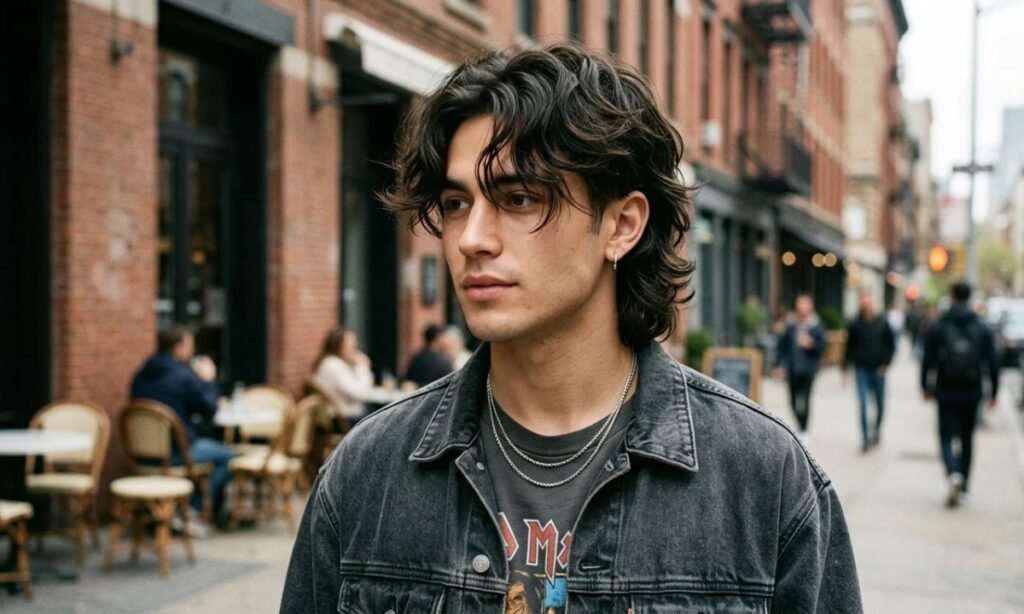
The Middle Part Modern Mullet combines a balanced center part, textured layers, shorter sides, and a longer back. It gives you a hairstyle that looks relaxed from the front while creating a distinctive shape around the sides and neckline.
Are you looking for a haircut that feels modern without looking overly polished? This style offers a practical middle ground, especially if you enjoy movement, natural volume, and a little personality in your everyday appearance.
Unlike traditional mullets, modern versions focus on blending, proportion, and texture. You can keep the sides subtle for a professional finish or introduce a sharper fade for a bolder appearance.
The right version depends on your hair type, face shape, styling habits, and preferred length. This guide explores 12 variations, explains how to style the haircut, and helps you decide whether it suits your routine.
The Evolution of Middle Part Mullet in Modern Fashion
The mullet has moved through several fashion eras, from its recognizable short-front, long-back shape to more refined contemporary interpretations. Today’s versions often feature softer transitions, layered crowns, and carefully shaped lengths instead of the dramatic contrasts associated with older styles.
The middle part hairstyle adds another dimension by dividing the front hair into two sections. This creates a curtain-like effect around the forehead, allowing the hair to frame the face naturally rather than sitting in one uniform direction.
Modern barbers frequently combine this parting with textured layers, tapered sides, and a longer back. The result can look casual, editorial, or slightly rebellious, depending on the cut and styling products.
Social media, streetwear, music, and contemporary men’s grooming have also helped bring variations of the mullet into wider fashion conversations. However, trends change quickly, so choosing a cut that suits your features and lifestyle matters more than following a temporary viral look.
The most successful middle part mullets usually have one thing in common: every section feels connected. The fringe, crown, sides, and back work together rather than appearing like separate hairstyles.
12 Signature Variations of Middle Part Modern Mullet
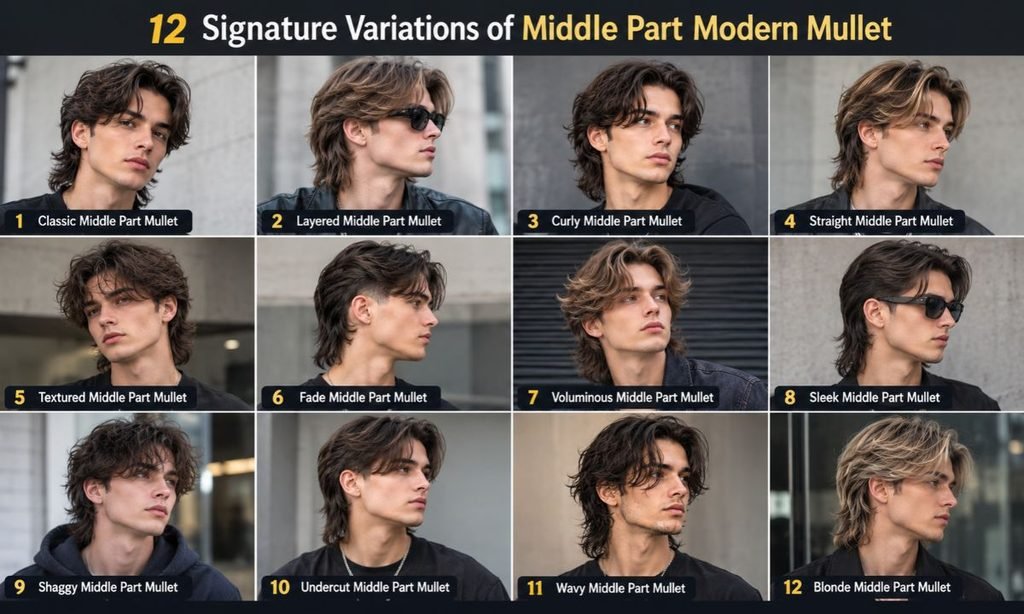
Not every middle part mullet creates the same impression. Some versions emphasize softness and natural movement, while others use sharp fades, heavier layers, or dramatic differences in length.
Before choosing a variation, consider your natural texture, the thickness of your hair, and how much time you want to spend styling it. Show your barber reference photos that resemble your current hair rather than relying on a picture with completely different length or density.
Soft Divider Mullet
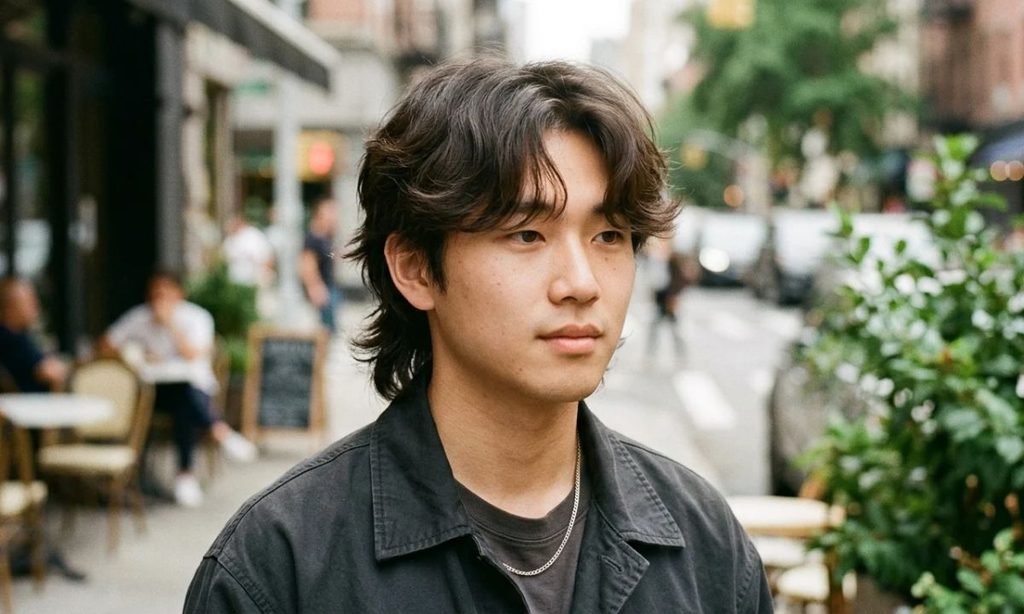
The Soft Divider Mullet features a relaxed center part with gently separated front sections. Its layers flow toward the temples before blending into a longer back, creating a balanced appearance without harsh lines.
This option works particularly well for people who prefer understated hairstyles. A small amount of lightweight styling cream can separate the fringe while keeping the overall finish flexible and natural.
Ask your barber for soft layering around the face and a gradual transition through the sides. Avoid excessive thinning if your hair is already fine, because removing too much density can make the ends look sparse.
Editorial Volume Mullet
The Editorial Volume Mullet takes inspiration from fashion photography and runway grooming. It features a fuller crown, a defined middle part, and longer sections that create noticeable movement around the back.
This variation suits people who enjoy a more expressive hairstyle. Medium to thick hair often provides enough natural body to support the shape, although finer hair may need careful blow-drying to create additional lift.
Ask your barber to preserve volume around the crown while controlling excess bulk near the temples. Use a blow-dryer and a lightweight volumizing product instead of heavy waxes that flatten the roots.
Skin Fade Center Mullet
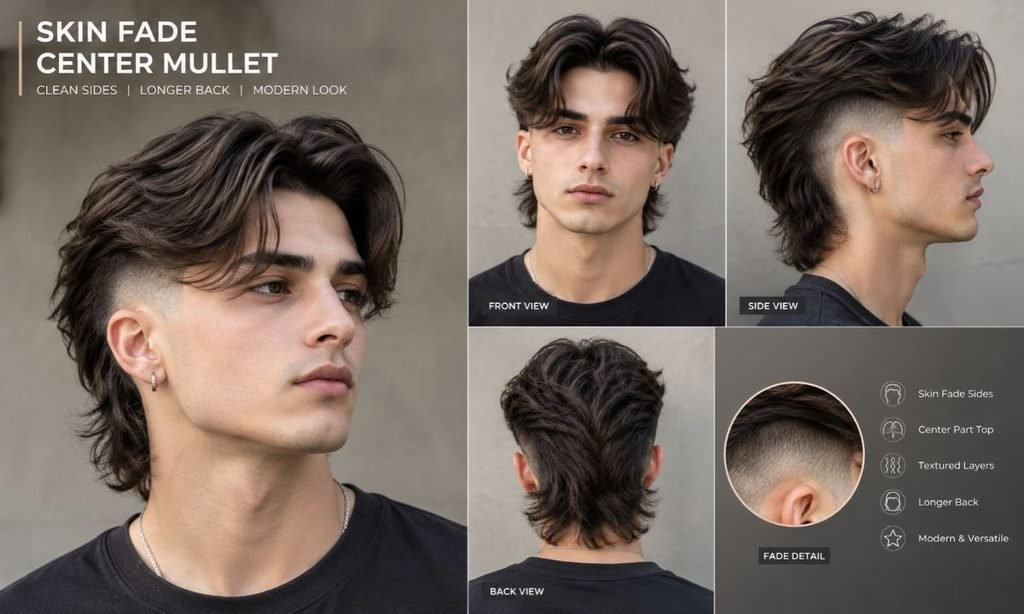
The Skin Fade Center Mullet combines a clean fade with a longer, center-parted top and back. The contrast between the closely shaved sides and the flowing upper sections creates a sharper, more noticeable silhouette.
This version can suit people who enjoy modern barbering and precise detailing. The fade also keeps the sides looking neat, although the contrast may feel less subtle than a traditional taper.
Ask for a skin fade that complements your head shape and connects naturally with the upper layers. Because very short fades grow out visibly, plan regular barber visits if you want to maintain crisp edges.
Soft Layer Flow Mullet
The Soft Layer Flow Mullet emphasizes movement instead of dramatic contrast. Longer layers around the crown and back create a flowing shape, while the middle part allows the front sections to fall naturally on either side.
This option is particularly appealing for medium-length hair with a slight wave. Straight hair can also work well when the barber adds suitable layers and the wearer uses gentle styling techniques.
Request a flowing outline rather than an aggressively disconnected cut. A lightweight leave-in conditioner can improve manageability, especially when the hair tends to become dry or tangled.
Urban Texture Mullet

The Urban Texture Mullet has a slightly rougher finish, combining a relaxed middle part with separated layers and a defined neckline. It pairs easily with casual clothing, oversized shirts, denim, and contemporary streetwear.
The defining feature is texture rather than perfect symmetry. Individual sections should have movement, but the hairstyle still needs a deliberate shape to prevent it from looking unkempt.
Ask your barber to create texture that suits your hair density instead of removing large amounts of weight automatically. Work a small amount of matte styling paste through dry hair to emphasize separation without creating excessive shine.
Balanced Edge Mullet
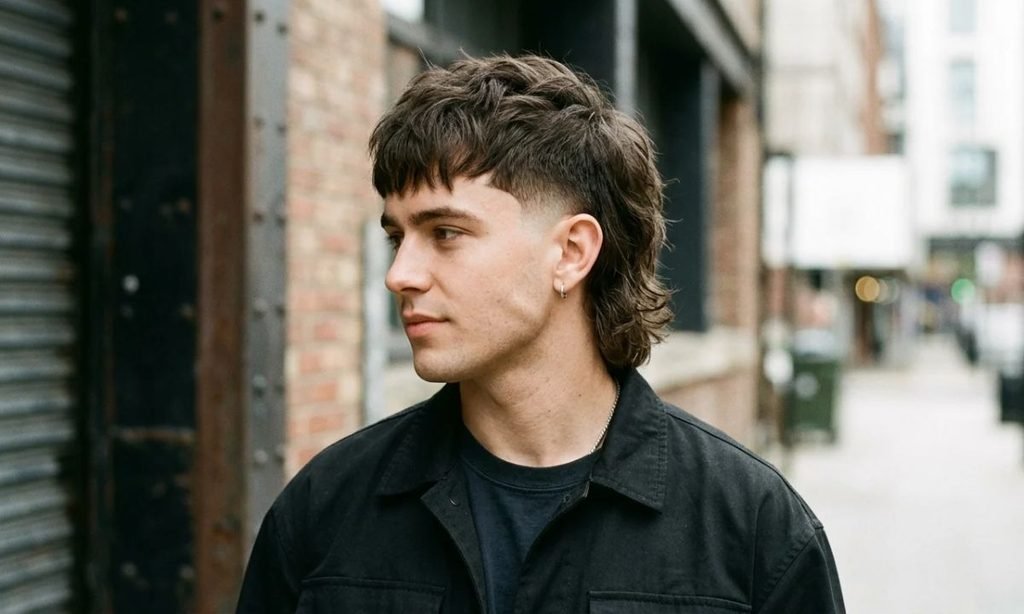
The Balanced Edge Mullet combines a clean outline with a softer center-parted top. Its sides remain controlled, while the back retains enough length to preserve the recognizable mullet shape.
This variation suits people who want something distinctive without choosing an extremely dramatic haircut. It can also be a useful starting point if you are transitioning from a conventional taper or layered medium-length style.
Tell your barber that you want visible structure without an exaggerated disconnect. Maintaining a balanced relationship between the front, sides, and back will help the haircut look intentional as it grows.
Curved Flow Middle Mullet
The Curved Flow Middle Mullet uses rounded layers to guide the front sections away from the center part. The hair follows the contours of the forehead and temples, creating a softer frame around the face.
This approach can work especially well with naturally wavy hair. Straight hair can achieve a similar appearance through controlled blow-drying and light shaping, although the amount of movement will depend on its natural texture.
Ask for curved face-framing layers rather than a blunt fringe. A round brush can help guide the front sections outward without forcing them into an overly rigid shape.
Minimal Precision Mullet
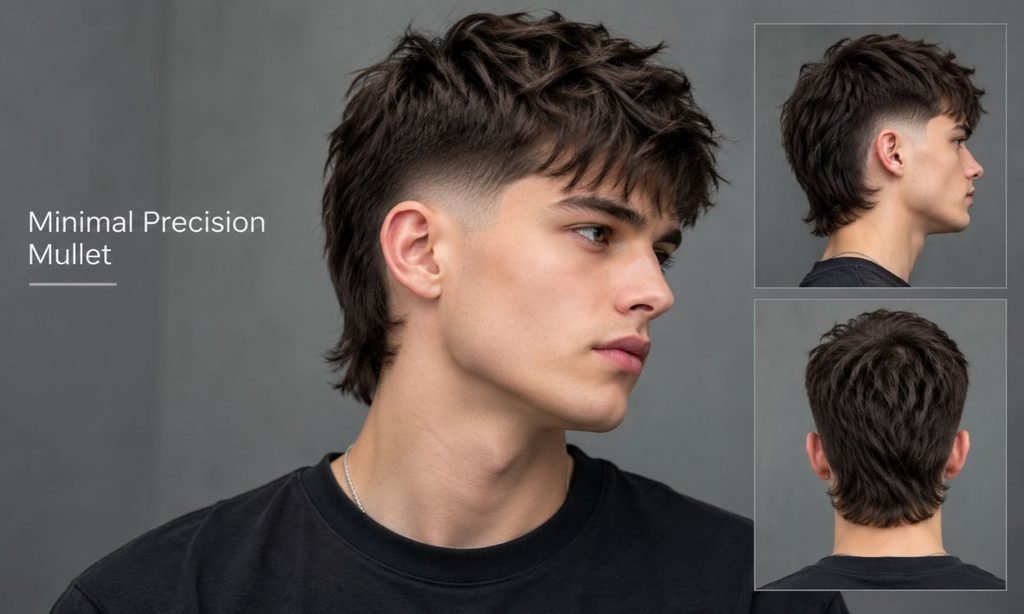
The Minimal Precision Mullet focuses on clean proportions, subtle layering, and a controlled center part. Instead of dramatic volume or heavy texture, it relies on a carefully shaped outline to create a polished finish.
This style can appeal to people who prefer simple grooming and restrained fashion choices. It can also work in workplaces where a tidy appearance matters, provided the finished cut follows the individual’s grooming expectations.
Ask your barber to keep the silhouette neat and the transitions deliberate. A small amount of smoothing cream can control flyaways while preserving enough movement to avoid a stiff appearance.
Heavy Texture Center Mullet
The Heavy Texture Center Mullet features pronounced separation throughout the crown, fringe, and back. The middle part remains visible, but individual layers create a fuller, more rugged appearance.
This version often suits thick hair because it gives the barber enough density to shape distinct sections. Fine hair can still support a textured mullet, although aggressive thinning may reduce the fullness needed to create the desired effect.
Request carefully placed layers that remove unwanted bulk without weakening the ends. A matte clay or texturizing paste can help define the shape, but use a small amount first to prevent buildup.
Loose Wave Mullet
The Loose Wave Mullet works with natural waves to create a relaxed, flowing hairstyle. Its center part separates the front sections, while the crown and back retain enough length for the waves to form their own pattern.
This variation is particularly suitable for people whose hair already bends or curls slightly. Rather than fighting that texture with repeated heat styling, you can encourage its natural movement through suitable conditioning and gentle drying.
Ask your barber to account for how your waves behave when dry. Apply a lightweight curl cream or leave-in product if needed, then allow the hair to air-dry or use a diffuser on a suitable setting.
Sharp Contrast Mullet
The Sharp Contrast Mullet combines a defined center part with a stronger difference between the top and sides. A high fade, shorter temples, or clearly separated layers can make the silhouette more striking.
This version suits people who want their haircut to become a noticeable part of their appearance. However, the contrast should still complement the top length and back rather than making the haircut appear disconnected by accident.
Bring reference images and discuss how much contrast you actually want. A skilled barber can adjust the fade height and layering to create a bold look without sacrificing the overall balance.
Modern Soft Drop Mullet

The Modern Soft Drop Mullet uses a gentle curve through the back and sides, with the longer hair following the natural shape of the head. The center-parted fringe softens the front, while the rear length provides the mullet’s signature character.
This option is ideal for people who prefer movement over sharp geometry. It can look especially natural when the crown, temples, and neckline blend smoothly into one another.
Ask for a softly curved outline and enough length at the back to maintain the shape. Regular light trims can keep the silhouette controlled without removing the length that makes the style distinctive.
Professional Styling Breakdown
A good haircut provides the foundation, but everyday styling determines how the middle part modern mullet looks outside the barbershop. You do not need an elaborate routine; the right preparation, product choice, and drying direction usually make the biggest difference.
Start with clean hair and remove excess water using a towel. Avoid rubbing aggressively, especially if your hair is wavy or prone to frizz, because rough handling can disturb the natural texture.
Use Lightweight Texture Products
The best styling product depends on your hair’s thickness, natural movement, and desired finish. Lightweight styling cream provides flexible control, while matte paste offers stronger separation and volumizing mousse can support fuller roots.
Start with a small amount and distribute it evenly rather than concentrating everything at the front. Applying too much product can weigh down fine hair, make the center part greasy, or cause thick hair to form stiff sections.
For wavy hair, a suitable curl cream may help preserve natural definition. If your hair is straight, a light texturizing spray can add grip, although you should avoid products that leave your hair excessively dry.
Maintain Natural Symmetry
A center part creates a visual line that divides the front hair into two sections. However, natural growth patterns, cowlicks, and differences in hair density can prevent both sides from falling identically.
Use your nose and the center of your forehead as practical visual guides when creating the part. A comb can establish the initial separation, but your fingers may produce a softer finish that suits a relaxed mullet.
Do not force the hair into perfect symmetry if your natural growth pattern resists it. A slightly uneven, natural-looking finish can be more flattering than a rigid part that requires constant adjustment.
Focus on Controlled Volume
Volume helps the middle part modern mullet maintain its shape, especially when the crown tends to flatten. The goal is to create lift where needed without making the top appear disproportionately large.
Use a blow-dryer on damp hair while lifting the roots gently with your fingers or a suitable brush. Direct the front sections away from the center part, then allow the hair to settle before adding a finishing product.
Thick hair may need less root lift and more attention to controlling bulk. Fine hair usually benefits from lighter products and careful drying, because heavy creams and oils can make the roots appear flat.
Regular Shaping Is Key
A mullet depends on the relationship between its shorter sides and longer back. When the sides grow out too much, the contrast may soften; when the back becomes excessively heavy, the overall shape can lose its balance.
Your ideal trimming schedule depends on the cut and how quickly your hair grows. A sharp skin fade may need attention every few weeks, while a softer layered mullet can often go longer between appointments.
Tell your barber which parts you want to preserve, particularly the fringe and back length. Regular shaping should support the haircut’s original design rather than repeatedly shortening the sections that give it character.
Heat Styling Direction Matters
The direction of your blow-dryer can influence how the middle part falls. Directing both front sections away from the center can encourage a curtain-like shape, while drying everything straight down may create a flatter fringe.
Use moderate heat and keep the dryer moving instead of holding it close to one section. A nozzle can help direct airflow, while a diffuser may work better when you want to preserve natural waves.
Apply a heat protectant before using hot tools. If your hair already has good natural movement, you may need only a short drying session rather than daily heat styling.
Who Should Choose This Hairstyle?
The Middle Part Modern Mullet can suit a wide range of people, but the best version depends on individual features and styling preferences. Hair texture, density, forehead proportions, and the shape of your head all influence how the finished haircut appears.
People with medium-length hair often have an easier starting point because the front and back already provide some room for layering. Shorter hair can be shaped into an early version, although the full silhouette may take time to develop.
Your face shape can also guide the barber’s choices. The following suggestions are starting points, not strict rules, because personal proportions and individual styling preferences matter more than a single category.
| Face shape | Styling approach | What to consider |
| Oval | Soft center part with balanced layers | Most variations can be adapted |
| Round | Added height and controlled side volume | Avoid excessive width around the temples if you want a more elongated appearance |
| Square | Soft layers around the forehead and temples | Curved edges can soften prominent angles |
| Oblong | Moderate crown height and fuller sides | Avoid adding too much height if you prefer balanced proportions |
| Heart-shaped | Balanced fringe and controlled back length | Keep the front and sides in proportion to the forehead and chin |
Hair texture deserves equal attention. Straight hair can produce a clean, defined center part, wavy hair naturally supports a flowing finish, and curly hair may need extra length and carefully placed layers to maintain the intended shape.
Fine hair often benefits from a less aggressive cut that preserves density. Thick hair may need internal layering to reduce bulk, while very curly hair requires a barber who understands shrinkage and how curls change the haircut’s outline.
Consider your daily routine before committing. If you rarely style your hair, choose a softer version that works with its natural growth pattern rather than one that depends on a precise fade and carefully arranged fringe.
Style Positioning in the Modern Fashion Industry
The middle part modern mullet sits between classic barbering and contemporary textured hairstyles. Its defining features combine the recognizable mullet silhouette with a center-parted fringe, giving it a different character from a conventional taper, crew cut, or standard curtain hairstyle.
Its versatility comes from the way barbers can adjust the length and finish. A low taper can create a restrained appearance, while a skin fade or heavily textured crown produces a stronger visual statement.
The haircut also works with different clothing styles. Casual denim, relaxed tailoring, streetwear, and simple everyday outfits can all complement it, depending on the shape and finish you choose.
However, no haircut automatically guarantees a fashionable or professional appearance. Clean styling, healthy-looking hair, suitable proportions, and personal confidence usually contribute more than the trend label attached to the cut.
If you work in a conservative environment, discuss workplace expectations before choosing a dramatic variation. A softly layered mullet with a controlled neckline may offer the personality you want without the stronger contrast of a high fade.
How to Ask Your Barber for a Middle Part Modern Mullet
Clear instructions help your barber understand the shape you want. Instead of simply requesting a trendy mullet, explain how you want the front, sides, crown, and back to work together.
Bring two or three reference photographs showing similar hair texture and length to your own. One image can illustrate the fringe, another can show the side profile, and a third can demonstrate the back shape.
During the consultation, discuss these details:
- Middle part: Decide whether you prefer a precise separation or a softer curtain effect.
- Top length: Explain how much volume and movement you want around the crown.
- Side treatment: Choose between a natural taper, a low fade, or a more noticeable skin fade.
- Back length: Specify whether you want a subtle extension or a more pronounced mullet silhouette.
- Texture: Tell the barber whether you prefer smooth layers, loose waves, or a choppy finish.
- Maintenance: Explain how often you are willing to return for trims.
Ask your barber to assess your hair while considering its natural growth direction. A good consultation should include realistic advice about what your current length and texture can achieve.
If you are unsure about a dramatic change, start with a softer version. You can add more contrast or texture during a later appointment, whereas restoring removed length takes time.
Common Middle Part Modern Mullet Styling Mistakes
One frequent mistake is creating a middle part without considering the rest of the haircut. If the front is too short or the crown lacks suitable layering, the hairstyle may resemble a standard curtain cut rather than a balanced mullet.
Another problem is using too much product. Heavy wax, excessive oil, or a large amount of styling cream can make the hair appear greasy and reduce its natural movement.
Overusing thinning shears can also weaken the shape, particularly on fine hair. Ask your barber to remove bulk selectively instead of thinning every section simply to create texture.
Ignoring the neckline and side growth can gradually change the silhouette. Even if you want to grow the back longer, occasional shaping can help maintain a deliberate outline.
Finally, avoid comparing your finished haircut too closely with photographs that use professional styling or different hair textures. Use those images as references, then adapt the result to your own features and daily routine.
How to Maintain Healthy Hair With a Modern Mullet
A well-shaped haircut looks better when the hair remains manageable and healthy. Your routine does not need to be complicated, but it should match your scalp, hair texture, and exposure to heat or styling products.
Choose a shampoo that suits your scalp rather than washing according to a rigid schedule. People with oily scalps may need more frequent washing, while dry or textured hair may benefit from a gentler routine and suitable conditioning.
Use conditioner on the lengths when needed, paying attention to the longer sections at the back. These ends can become more noticeable as the mullet grows, so gentle detangling and avoiding unnecessary friction can help maintain their appearance.
If you use a blow-dryer regularly, apply heat protectant and avoid excessive temperatures. You should also clean styling tools and wash product buildup away when necessary, especially if you use paste or texturizing sprays frequently.
Remember that maintenance involves more than preserving length. Keeping the sides proportionate, checking the neckline, and refreshing the layers at suitable intervals help the hairstyle retain its intended shape.
FAQs: Middle Part Modern Mullet
What Is a Middle Part Modern Mullet Haircut?
A Middle Part Modern Mullet combines a center-parted fringe with shorter or tapered sides and a longer back. Modern versions usually emphasize texture, controlled layering, and smoother transitions rather than an exaggerated difference between the front and rear sections.
The final appearance depends on the fade, top length, and natural hair texture. You can choose a subtle everyday version or a bolder variation with stronger contrast.
Is the Middle Part Modern Mullet Suitable for All Face Shapes?
It can be adapted to many face shapes, but the most flattering version depends on proportion and styling. A barber can adjust the fringe, crown height, side volume, and back length to complement your features.
For example, someone who wants to reduce the appearance of facial width may prefer controlled volume at the temples. Someone with a longer face might prefer moderate height and fuller sides.
How Do I Style a Middle Part Modern Mullet Daily?
Start with clean or refreshed hair, then establish the middle part while the hair remains slightly damp. Use a blow-dryer to guide the front sections outward, creating a relaxed curtain effect around the forehead.
Finish with a small amount of styling cream or matte paste, depending on your desired texture. If your hair is naturally wavy, you may need less heat and can let the natural movement shape the final result.
Does This Haircut Require High Maintenance?
Maintenance depends on the variation you choose. A skin fade requires more frequent barber visits to preserve its sharp appearance, while a softer layered mullet can remain attractive with less frequent trimming.
Daily styling also depends on your hair type and preferred finish. Choosing a cut that works with your natural texture can reduce the time and effort required each morning.
Can I Get a Professional Look With a Middle Part Modern Mullet?
Yes, a middle part modern mullet can look professional when the proportions and finish suit your workplace. A controlled fringe, tidy neckline, subtle taper, and moderate back length can create a more restrained appearance.
Discuss your work environment with your barber before choosing a dramatic fade or heavily textured finish. The goal is to keep the haircut distinctive without making your daily grooming routine unnecessarily difficult.
Final Thoughts
The Middle Part Modern Mullet offers a flexible way to combine a center-parted fringe, textured layers, and a distinctive back shape. Its appearance can range from understated and polished to bold and expressive, depending on the details of the cut.
The best variation is the one that works with your natural hair, complements your features, and fits your daily routine. Choose reference photos carefully, discuss realistic styling options with your barber, and avoid adding more contrast than you actually want.
Start with the shape and length that feel comfortable, then refine the details as your hair grows. With suitable cutting, simple styling, and regular maintenance, you can make this modern mullet your own.
